Last Updated: 17 May 2026
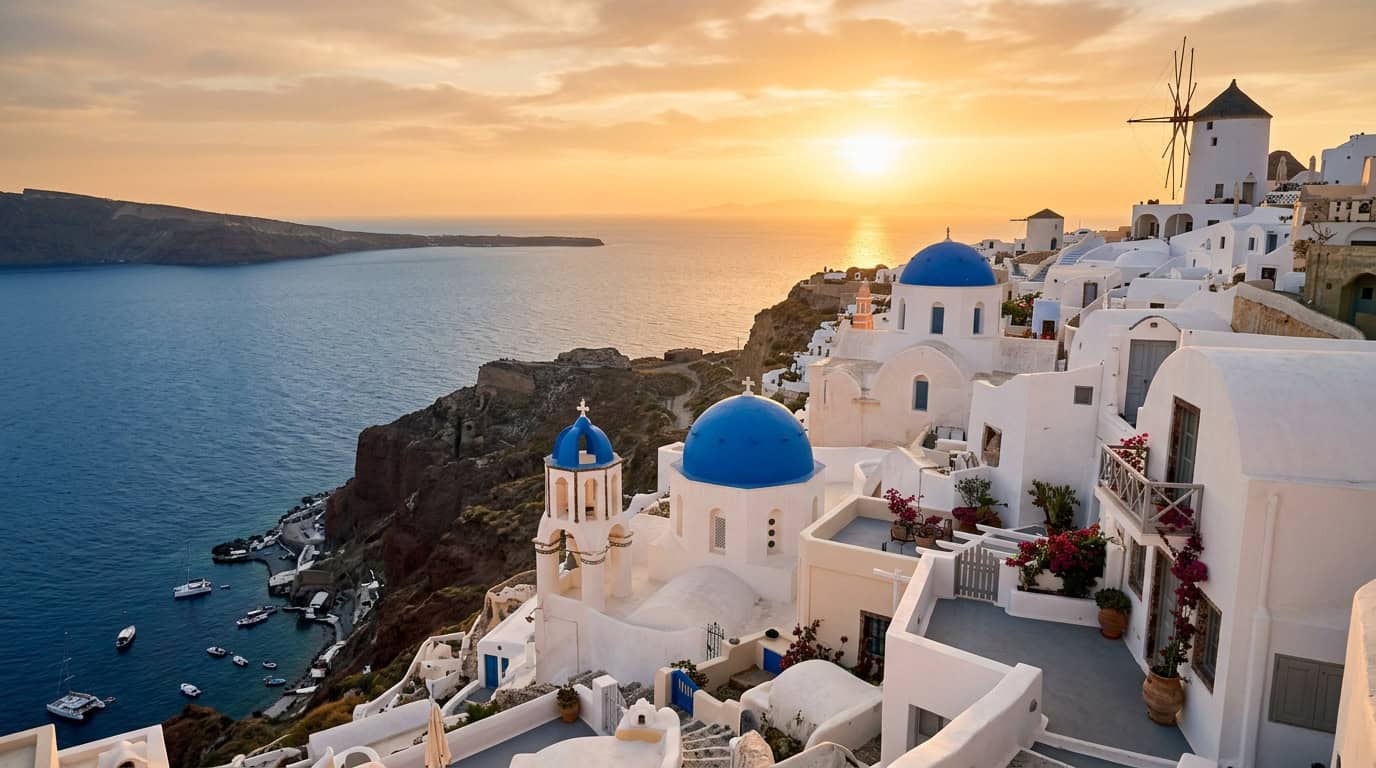
Santorini is the island that lives twice in the imagination of every traveler. There is the famous version, the white cubist houses cascading down a cliff above blue water, the sunset crowds in Oia, the postcard you have seen a thousand times. Then there is the actual island, the volcanic caldera that exploded in the second millennium BC and reshaped Aegean civilization, the buried Bronze Age city at Akrotiri that some scholars believe gave rise to the legend of Atlantis, the wineries growing grapes in volcanic ash, and the smaller villages most visitors never reach. After several visits I now know that the real Santorini is the second one, and that the first one is just the entrance to it.
In this guide I will share how I plan a three-day visit that covers the iconic sunsets but also the volcanic geology, the Bronze Age archaeology, the lesser-known villages, and a caldera sailing day that takes you to places no road can reach. I will tell you which Oia sunset spots actually have space to stand, which Akrotiri rooms have the best frescoes, and how to time the day to avoid the worst of the cruise ship crowds.
Key Takeaways
- The Minoan eruption around 1600 BC was one of the largest volcanic events in human history, ejecting roughly 60 cubic kilometers of material and reshaping the entire eastern Mediterranean.
- The buried Bronze Age city of Akrotiri was preserved under volcanic ash like a Mediterranean Pompeii, with frescoes, three-story houses and an advanced drainage system still visible.
- Oia is the iconic sunset village, but Imerovigli (between Oia and Fira) offers equally good caldera views with much smaller crowds.
- A 5-hour caldera sailing trip takes you to the hot springs, the volcano of Nea Kameni, and the swimming bay of Thirassia for around 100 euros per person including lunch.
- Santorini wines, especially Assyrtiko whites, are grown in low basket-shaped vines that protect against wind and use volcanic ash as a natural mineral fertilizer.
- Three full days is the minimum for a proper visit, four to five days lets you enjoy the island at a Greek pace rather than a tourist sprint.
Oia, Imerovigli and the Sunset Question
The Santorini sunset is a real phenomenon and not just a tourism marketing creation. The combination of the western-facing caldera cliffs, the volcanic islands of Nea Kameni and Palia Kameni in the foreground, and the open Aegean horizon beyond produces a light show that genuinely justifies the reputation. The complication is that thousands of other people know this and crowd into the same spots every evening, which can turn a sublime moment into a pushy, photograph-taking scrum.
How to Watch the Sunset From Oia
Oia, at the northern tip of Santorini, is the most famous sunset viewing village. The classic spot is the ruined Venetian castle (Castro of Saint Nicolas) at the western edge of the village, where the cliff drops straight down to the sea and the line of blue-domed churches frames the horizon. By 18:30 in summer, this spot is so crowded that you literally cannot move once you find a place to stand. People start arriving by 17:30 to secure a position.
For a less competitive Oia sunset, walk down the stone steps from the castle area toward Ammoudi Bay below the village. About halfway down there are several flat rocks where you can sit with caldera views, less photogenic than the castle but still beautiful. Another option is to book a table at one of the cliffside restaurants in Oia. Strogili, Lotza and Sunset Tavern all have terrace tables with prime sunset views. Reservations must be made days or weeks in advance for prime tables in peak season.
The actual best sunset photos from Oia are not taken at the castle, they are taken from the small footpath that runs along the caldera edge on the northern side of the village, away from the main tourist concentration. Walk through the village toward the windmill at the far end and you will find this path. Far fewer people, same view, often a small bench or stone wall to lean against.
Imerovigli, the Quieter Alternative
Imerovigli is a small village on the caldera edge between Oia and Fira, perched on the highest point of the island. The setting is more dramatic than Oia, with the Skaros Rock (a former Venetian fortress site) jutting out into the caldera and the church of Agios Georgios standing alone on its tip. Sunset views from Imerovigli are arguably better than from Oia, and the crowds are perhaps 20 percent of what you face in Oia.
The walk out to Skaros Rock takes about 20 minutes from the main square of Imerovigli, descending on a stone path and then climbing back up to the church on the tip. The path is steep in places but manageable with normal walking shoes. At the church you have 360-degree views over the caldera, the open sea, and the southern half of Santorini. This is one of the most peaceful sunset spots on the island.
If you want to combine a sunset with a meal, the restaurants in Imerovigli include Aegialos and Mezzo at the Avaton Resort, both with cliffside tables, prices in the 60 to 90 euro per person range. For something less expensive, the small taverns in the main village square serve good local food without the caldera view but with the village atmosphere. After dinner you can walk a few minutes to a viewpoint for the sunset.
Fira, the Capital and Its Sunset
Fira is the capital of Santorini and the largest of the cliff-side towns. Sunset from Fira is more urban in feel, with bars and clubs along the caldera edge and a more energetic evening atmosphere. The Caldera Bar, Franco’s Bar and the rooftop at the Atlantis Hotel are popular sunset venues with cocktails in the 12 to 18 euro range. The view is similar to Imerovigli but with a more international party crowd.
From Fira you can walk north along the caldera path toward Firostefani and Imerovigli, a 30-minute easy walk that gives you constantly changing caldera views. This is one of the best walks on Santorini, with little climbing or descending and frequent benches and viewpoints. Doing the walk in the hour before sunset means you arrive at Imerovigli just as the light turns golden, perfect for photos.
If you only have one evening on Santorini and you have already committed to dinner reservations in Fira, do not feel pressured to fight your way to Oia for sunset. The view from Fira’s caldera edge is fundamentally similar, just slightly less dramatic. You can do Oia properly on a separate morning trip and skip the sunset crowds entirely.
Akrotiri, the Bronze Age City Frozen in Volcanic Ash
The buried prehistoric city of Akrotiri, at the southern tip of Santorini, is the single most important archaeological site in the Cyclades and one of the most extraordinary in the Mediterranean. The city was destroyed and preserved by the volcanic eruption around 1600 BC, with three-story houses, plumbing, fresco-decorated walls and even wooden furniture in some cases protected under meters of ash. The result is a Bronze Age city as complete as Pompeii but 1,700 years older.
What You See Inside
The site is enclosed under a large modern shelter, with wooden walkways that take you through and over the excavated streets and houses. You walk on raised platforms about a meter above the original street level, looking down into the buildings as if from a second floor. The shelter protects the fragile structures from weather and allows controlled lighting that brings out the details of the architecture and the painted plasters.
The most famous building is the West House, where the famous “Ship Procession” fresco was found showing a fleet of Bronze Age ships sailing between two coastal towns. The fresco is now in the National Archaeological Museum in Athens, but a high-quality reproduction is displayed at the site. The buildings around the so-called Triangle Square are well preserved, with original wooden beams visible (carbonized but intact) and original floor tiles still in place.
The plumbing system at Akrotiri is one of the most striking features. Clay pipes carried water and waste under the streets, with double pipes allowing hot and cold water in some houses. This is over a thousand years before the Roman aqueducts that we usually think of as the first great hydraulic engineering. The sophistication of Bronze Age Aegean civilization, hinted at in the Akrotiri houses, has prompted some scholars to argue that this is the historical kernel of Plato’s Atlantis myth.
The Frescoes and the Museum
Most of the original frescoes from Akrotiri are in the Museum of Prehistoric Thera in Fira, not at the site itself. After visiting the buried city, plan a trip to the Fira museum to see the actual paintings. The collection includes the Boxing Boys fresco, the Antelopes, the Spring Fresco with swallows over a flowering scene, and the Ship Procession. The colors are still vivid after 3,600 years, preserved by the same volcanic ash that destroyed the city.
The Spring Fresco is particularly striking. It depicts a Cycladic scene with red lily-covered hills and pairs of swallows flying among the flowers. The composition has no human figures, just nature, and the energy of the swallows is rendered in confident curving lines that feel surprisingly modern. Looking at this painting you can imagine the Akrotiri residents waking in spring and watching the same scene from their windows, a continuity of human experience across nearly four millennia.
The museum is small and can be done thoroughly in 90 minutes. Combine it with the Akrotiri site visit (which takes 90 to 120 minutes) for a half-day of Bronze Age immersion. Entry to Akrotiri is around 12 euros, the museum is around 6 euros. A combined ticket is available and saves a small amount.
Visiting Practicalities
Akrotiri is open daily from 08:30 to 19:00 in summer (reduced hours in winter). Arrive at opening for the smallest crowds and the freshest air inside the shelter. The site has good wheelchair accessibility on the wooden walkways, with elevators between levels. There is a small cafe at the entrance and a parking area for cars and motorbikes.
The bus from Fira to Akrotiri runs hourly in summer and takes about 30 minutes. The bus terminus is a 5-minute walk from the site entrance. By car, follow the southern coastal road from Fira. By taxi, expect to pay 30 to 40 euros each way from Fira. A guided tour combining Akrotiri, the Red Beach (a short walk from the site) and a wine tasting costs around 80 euros per person and is a good choice if you want a structured half-day.
The Red Beach, a 10-minute walk from Akrotiri, has red volcanic cliffs above black sand and red pebbles. The setting is beautiful but the beach itself is small and crowded in summer. Swimming is possible but rockfalls from the cliffs are an occasional hazard, with the beach sometimes closed for safety. Check the conditions before walking down. The nearby White Beach, accessible only by boat, is a quieter alternative with similar dramatic geology.
The Caldera Sailing Day, the Hot Springs and the Volcano
The single most rewarding day activity on Santorini is a caldera sailing trip that takes you to the volcanic islands at the center of the caldera, the hot springs, the small island of Thirassia, and Oia for the return sunset. These trips typically last 5 to 6 hours and combine swimming, geology, food and the famous sunset in one organized package. They are touristy in the sense that everyone does them, but they are touristy because they are genuinely excellent.
What the Day Includes
A standard caldera trip departs from the old port of Athinios or from Ammoudi Bay below Oia, around 14:00 in the afternoon. The boat first sails to Nea Kameni, the active volcanic island at the center of the caldera. You disembark and walk for 40 minutes on a marked path to the crater rim, with views over the steaming volcanic vents and the entire caldera. The hike is moderate, with loose volcanic rock underfoot, and you should wear closed-toe shoes.
From Nea Kameni the boat sails the short distance to Palia Kameni, where there are hot sulfur springs in a small bay. The boat anchors offshore and you swim in to the warm yellow-tinted water. The temperature is around 30 to 35 degrees Celsius, pleasantly warm but not scalding. The sulfur stains light fabrics, so wear an old swimsuit for this stop. The mud at the bottom is supposedly good for the skin, locals come out covered in yellow ooze that they let dry for ten minutes before swimming back.
The boat then sails to Thirassia, the small inhabited island that was once connected to Santorini before the great eruption separated them. The bay of Korfos has several taverns where lunch is included on most tours. After lunch you have time to explore the small village, climb to the top of the cliff for views back across the caldera at Santorini, or just relax at the harbor. The pace is intentionally slow.
The Oia Sunset Finish
The boat sails north up the caldera in the late afternoon, timed to arrive at Oia for sunset around 19:30 (summer time). You watch the sunset from the boat in the bay below Oia, with the village glowing pink on the cliff above and the sun setting behind Thirassia in the distance. This is genuinely one of the best ways to see the Oia sunset, no crowds to fight, no jostling for position, just sitting on the deck with a glass of wine and the entire caldera as your stage.
After sunset the boat returns to Athinios or Ammoudi Bay, arriving around 21:00. Some tours include a short tender to the dock at Ammoudi so you can have dinner at one of the fish taverns in the bay before taking the bus or a taxi back to your hotel. The fish taverns at Ammoudi are good, with grilled octopus, fried calamari and whole fish from the morning catch.
The caldera sailing day costs between 80 and 150 euros per person depending on the operator, the size of the boat and whether food and drinks are included. The smaller sailing boats (catamarans for 12 to 20 passengers) are more comfortable than the larger motor boats (50 to 100 passengers). I recommend the catamaran options even at the higher prices, the experience is significantly better.
Booking the Trip
You can book through your hotel reception, through any of the dozens of tour operators in Fira and Oia, or online in advance through sites like GetYourGuide. In peak season (July and August) sailing trips can sell out a day or two in advance, especially the popular catamaran options. Booking online a week ahead is the safest approach for July-August travel.
Bring a swimsuit, towel, sunscreen, hat, sunglasses and water shoes. The hot springs swim involves entering the water in a rocky cove and water shoes make this easier. A small dry bag for your phone and wallet is useful for the swimming stops. Cash for tips for the crew (5 to 10 euros per person) is appreciated. The crew typically prepares lunch and drinks on board, and a small tip recognizes the effort.
If you are prone to seasickness, take medication before boarding. The caldera water is usually calm but afternoon winds can pick up in summer. The catamarans are stable and comfortable, but smaller motorboats can rock noticeably in any swell.
Wineries, Hidden Villages and Slower Days
If your first full day on Santorini is for the iconic sights and your second is for the caldera sailing trip, your third day should be for the slower pleasures of the island. Santorini has been producing wine for over three thousand years, and the volcanic soil and unique climate produce wines that exist nowhere else. The inland villages, away from the caldera, are quieter and more authentically Greek than the cliff towns. Together they make the day that rounds out a proper visit.
The Wineries Worth Visiting
Domaine Sigalas, near Oia, is one of the most prestigious wineries on the island and produces some of the best Assyrtiko whites in Greece. The tasting room overlooks the vineyards and offers flights of 5 wines for around 25 euros, with optional food pairings of local cheeses and tomatoes. Reservations recommended in summer.
Estate Argyros, near Episkopi Gonias, is family-owned for four generations and specializes in traditional Vinsanto (sun-dried sweet wine) alongside its Assyrtiko, Aidani and Athiri whites. The tasting setup is more relaxed than Sigalas, with shaded outdoor tables and a knowledgeable team. Flights start at 15 euros for 5 wines.
Santo Wines, near Pyrgos, is the largest cooperative on the island and offers tasting flights on a terrace with one of the best caldera views from a winery. The wines are good but not exceptional, the location is the main attraction. This is a good first stop for anyone new to Greek wine, with a wide selection and English-speaking staff. Flights from 10 euros.
The Santorini grape varieties are mostly unknown outside Greece, especially Assyrtiko, which has been planted on the island for over 3,000 years and is one of the world’s oldest continuously cultivated grape varieties. The vines are trained in a low basket shape (kouloura) to protect the grapes from wind and sea spray, a technique unique to Santorini. The volcanic soil gives the wines a distinctive mineral character that pairs beautifully with seafood.
Pyrgos and the Inland Villages
Pyrgos, the highest village on Santorini at 350 meters above sea level, was the medieval capital of the island before Fira took over. The village is built around a hilltop Venetian castle and consists of winding stone alleys, white houses, blue-domed churches and small tavernas. From the top of the castle ruins you can see the entire island at once.
Walking through Pyrgos in the late afternoon, when the tour buses have left and the local kids are kicking a soccer ball in the small square, is the antidote to the cliff-town crowds. The atmosphere is what Santorini was like before mass tourism, calm, residential, with a slight feeling of mountain village rather than coastal resort. Have a coffee at Kafenio Penelope in the main square and watch the village live its actual life.
Megalochori is another inland village worth exploring, with a more rural feel than Pyrgos and several small wineries within walking distance. The main square has a few good restaurants serving traditional Greek food at reasonable prices, including the Selene Restaurant which is one of the highest-rated restaurants on the island. Reservations essential.
The Beaches
Santorini beaches are different from those on other Greek islands because the sand is black volcanic, not white. The most popular beach is Perissa on the southeast coast, a long stretch of black sand with sunbeds, beach bars and water sports. The neighboring Perivolos beach continues to the south and is slightly quieter.
Kamari, on the southeast coast below the ancient ruins of Thera, is another major beach with similar amenities. The two beaches are similar in feel, both with grey-black sand, calm water, and a promenade lined with restaurants and shops. Choose based on your hotel location.
For a more dramatic beach experience, the Red Beach near Akrotiri (mentioned in the Akrotiri section) and the Vlychada Beach with its surreal white sand cliffs eroded by wind into Martian shapes are both worth a half-day. Vlychada is one of my favorite Santorini beaches, partly because most visitors do not know about it. For more on Greek islands, see my guides to Mykonos and Crete.
How to Get to Santorini and Practical Logistics
Santorini has both an airport and a busy ferry port, with options for arriving from Athens, other Greek islands, and (in summer) directly from Turkey. The logistics are easier than you might expect for a small Greek island.
Getting In
Santorini Airport (JTR) has direct summer flights from Athens (45 minutes), Thessaloniki (75 minutes), and many European cities including London, Paris, Berlin, Rome and Frankfurt. Aegean Airlines, Sky Express, Volotea, EasyJet and Ryanair all serve the airport. Domestic flights run year-round, international flights mostly summer only.
Ferries from Piraeus (Athens) take 5 to 8 hours by conventional ferry, or 4 to 5 hours by high-speed catamaran. The ferries arrive at the new port at Athinios, on the western coast about 10 kilometers from Fira. From Athinios there is bus and taxi service to all parts of the island, and a steep zigzag road climbs up to the main highway.
From Crete, ferries run 2 to 3 times per day in summer and take about 2 hours by high-speed. From Mykonos the high-speed ferry takes about 2.5 hours. Island-hopping itineraries combining Mykonos, Naxos, Paros and Santorini are easy in summer with daily connections between all the main islands.
Where to Stay
For the iconic caldera-view experience, stay in Oia, Imerovigli or Fira. Oia is the quietest of the three with the most upscale hotels and a romantic atmosphere, prices are also the highest (300 to 1,500 euros per night for caldera-view rooms). Imerovigli is similar in atmosphere but slightly more affordable. Fira is the most central and convenient, with lower prices but a busier atmosphere.
For a beach-focused stay, Kamari and Perissa offer more affordable beachfront hotels with similar amenities but without caldera views. Hotels in these areas typically cost 100 to 250 euros per night including breakfast.
For a quieter, more authentic experience, stay in one of the inland villages like Pyrgos, Megalochori or Vothonas. You will need a car or scooter to reach the beaches and caldera viewpoints, but you will have an experience of Santorini that few tourists ever taste. Hotels in these areas often start under 100 euros per night.
Getting Around
The Santorini bus system (KTEL) connects all the major villages with frequent services in summer. The hub is Fira, with buses running every 15 to 30 minutes to Oia, Kamari, Perissa, Akrotiri and Athinios port. Fares are 2 to 3 euros per ride. The buses are old but reliable, and they get very crowded in peak hours.
For more flexibility, rent a car or scooter. Cars cost 40 to 80 euros per day depending on the season, scooters around 20 to 40 euros. Driving on Santorini is straightforward but the roads in the cliff villages are narrow and parking is difficult. Bring an international driving permit, which is required for foreign drivers in Greece.
Taxis are limited on Santorini (only around 30 taxis on the entire island) and difficult to flag in summer. Book in advance through your hotel for important journeys like airport transfers. For evening trips between villages, several private transfer companies offer pre-booked rides at fixed prices, more reliable than waiting for a taxi.
Frequently Asked Questions
How many days should I spend in Santorini?
Three full days is the minimum for a satisfying visit, covering the iconic caldera villages and sunsets, a caldera sailing day, and the Akrotiri archaeological site. Four to five days lets you add winery visits, inland villages and proper beach time. A week is generous, allowing day trips by ferry to nearby islands like Folegandros or Sikinos.
When is the best time to visit?
May, June, September and early October offer pleasant temperatures, calm seas and manageable crowds. July and August are hot (30 to 35 degrees Celsius) and very crowded, with hotel prices at peak. April and late October are quieter and cheaper but with cooler weather and some businesses closed. Winter is very quiet, with many tourist services closed, and ferry service reduced.
Is Santorini too expensive?
Santorini is the most expensive Greek island for hotels, especially caldera-view rooms. However, food, transport and most activities are similar in cost to other Greek islands. You can visit Santorini on a moderate budget by staying in Kamari, Perissa or an inland village rather than on the caldera, eating at local taverns rather than tourist restaurants, and using the bus rather than taxis. Budget 80 to 150 euros per person per day in this style.
Is the Santorini sunset really worth the hype?
Yes, but with caveats. The sunset itself is genuinely spectacular and unique because of the volcanic geography. The Oia crowd experience can be exhausting and intrusive. The trick is to know your alternatives, such as Imerovigli, a caldera sailing trip, or a quieter Oia path away from the main castle viewpoint. Enjoyed properly, the sunset is one of the great Mediterranean experiences.
Can I do Santorini as a day trip from another island?
You can, but it is not ideal. Day trips by high-speed ferry from Crete, Mykonos and Ios are possible and give you 5 to 7 hours on the island. This is enough to see Fira and Oia and have lunch, but not enough for Akrotiri, the caldera sailing day, or a relaxed sunset. If you can spend at least one night, do.
Is Santorini family friendly?
Santorini works well for families with older children (10+) who can appreciate the dramatic geography, archaeology and sunsets. For families with very young children, the cliff villages have many steep steps and narrow paths that can be challenging with strollers. The beach areas at Kamari and Perissa are more family-friendly. The UNESCO tentative list includes the Minoan sites of Santorini as nominated for World Heritage status.
About the Author
I’m Ilknur Acar, the founder of Bir Dakikada Geziyorum. Santorini is one of those places I went to expecting to be disappointed by the cliche and instead found to be richer and stranger than the postcards suggest. I write history-rooted travel guides that respect the layered past of the Mediterranean. Follow along for more.