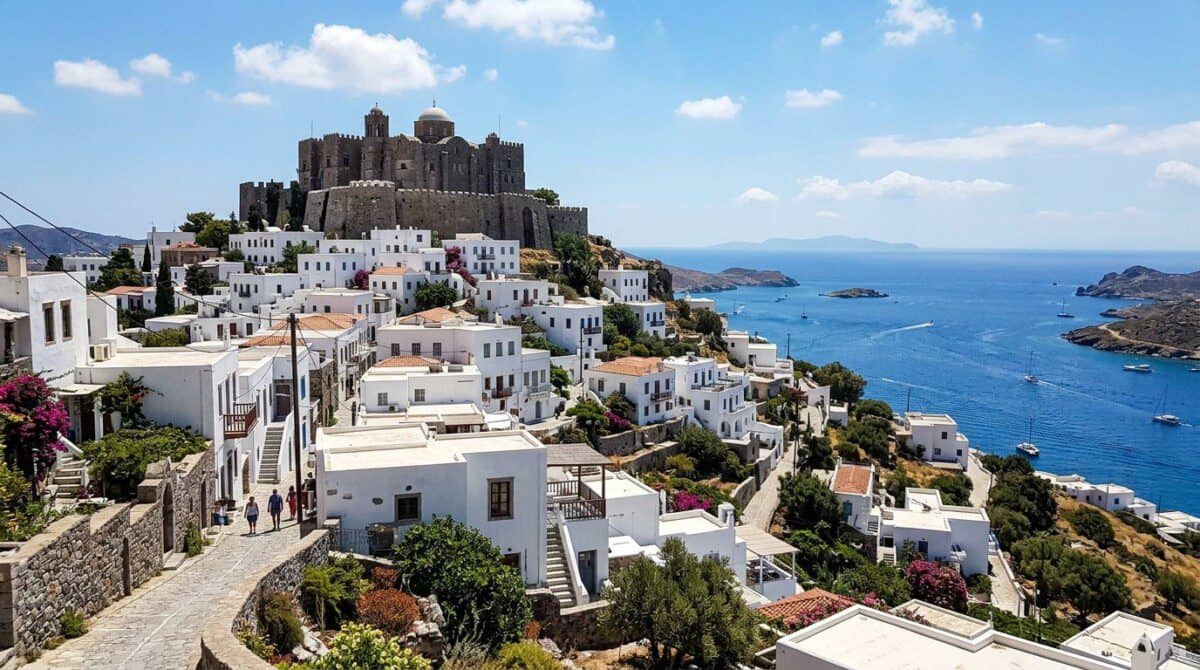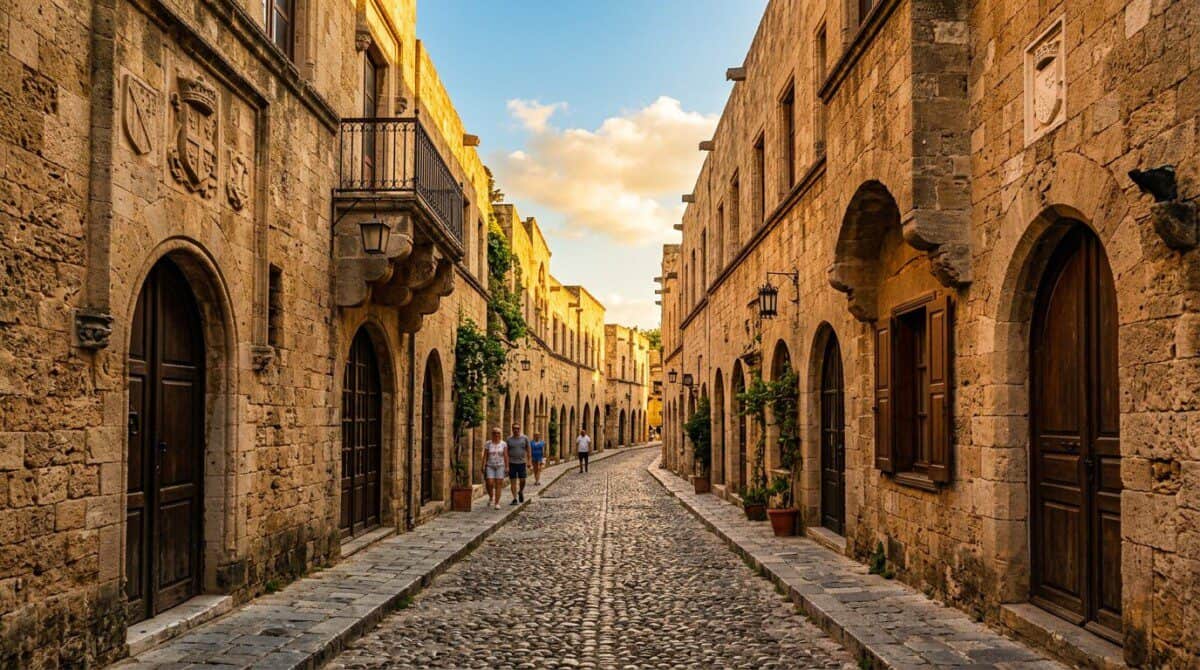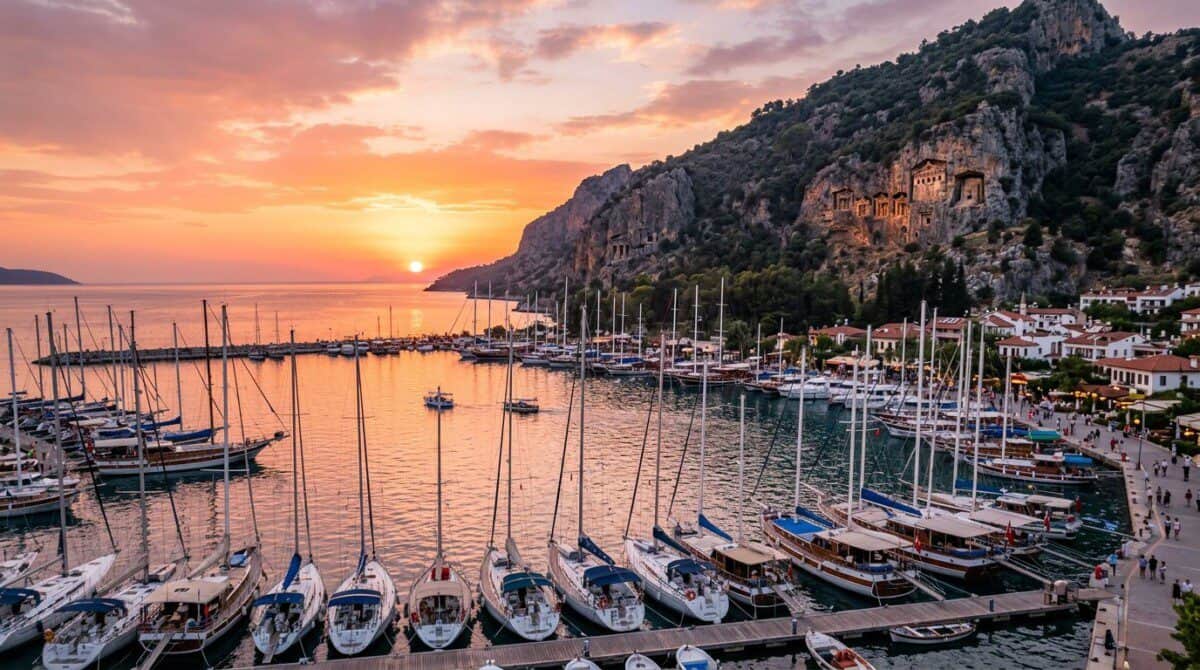
Side, Turkey things to do goes far beyond the all-inclusive resort it has become known for in recent years. The peninsula on Turkey’s Mediterranean coast holds one of the most photogenic ancient cities anywhere in the country, two sandy beaches, and a small pedestrian center that turns into a string of soft fairy lights after dark.
Last Updated: 16 May 2026
Key Takeaways
- Side sits 65 km east of Antalya Airport on a small peninsula in Pamphylia, the ancient region of Turkey’s Mediterranean coast
- The Apollo Temple at the peninsula’s tip is free to enter and one of the best sunset spots in the country
- The Roman theater of Side seated around 15,000 spectators and is one of the largest in Anatolia
- Side’s two beaches (West Beach and the longer East Beach toward Kumkoy/Sorgun) both hold Blue Flag certifications
- Half-day trips to Manavgat Waterfall (8 km), Aspendos Roman theater (35 km), and Koprulu Canyon for rafting are all accessible from Side
- The ancient name Side comes from the Luwian word for pomegranate, the symbol of abundance in the region’s pre-Greek civilizations

The Apollo Temple and the Side Sunset
The first time I walked out to the western tip of Side at sunset, I genuinely understood why almost every guidebook puts the Apollo Temple on the cover. The five remaining columns face directly out over the Mediterranean, and when the sun starts to drop the white marble turns slowly rose, then coral, then gold.
What the Temple Was and Why It Was Built Here
The Temple of Apollo at Side was built in the 2nd century CE during the Roman imperial period. It stood on the very tip of the peninsula because Apollo, in Side’s particular cult, was associated with the sun and with safe passage at sea. Sailors approaching the harbor saw the temple from kilometers offshore.
The structure was Corinthian, with 30 fluted columns surrounding the inner cella. The five that still stand today were re-erected in the 1980s using the original stone blocks recovered from the surrounding ground. The platform is original and clearly visible.
Next to the Apollo Temple stood a smaller Temple of Athena, also Corinthian, but only the foundations remain visible today. The two temples shared a sacred precinct, and Side’s coins from the imperial period show both deities side by side.
Timing Your Visit for the Best Light
Most guidebooks tell you to visit the Apollo Temple at sunset. This is good advice, but it needs a few practical adjustments. Arrive 45 minutes before the official sunset time. The temple itself sits on a small rise and you want to claim a spot on the seaward side before the crowd builds.
Bring a tripod if you photograph seriously. The wind off the Mediterranean is steady, the contrast between the bright sky and the shaded columns is significant, and a wide-angle lens (16-35 mm equivalent) captures the columns and the sea together best. Sunset in Side runs from around 17:40 in winter to 20:30 in midsummer.
The temple is free to enter at all hours and is unfenced. If sunset is overcast, come back at sunrise. The light is similar in tone but softer, and the site is almost completely empty until around 09:00.
Where to Drink With a View of the Temple
Three or four restaurants on the peninsula’s southwestern arc offer direct views of the temple from their terraces. Soundwaves Restaurant, Moonlight Restaurant, and Aphrodite Tower all sit at the right angle.
A glass of local Antalya wine costs €4 to €7 in 2026, a full dinner with mezes runs €25 to €45 per person. Reserve in peak season; the sunset tables go first. Ask specifically for “Apollo view” or “Apollon manzarali” when booking.
If you want a budget option, walk past the temple to the small rocky beach immediately beyond it. Several local families bring snacks and watch the sunset from the rocks. The view is the same.
The Side Ancient City and Roman Theater
The whole peninsula is an open-air archaeological site. Walking the modern pedestrian streets, you cross the Roman colonnaded street, pass the agora, climb the steps of the 15,000-seat theater, and step under the Vespasian Gate, all within an hour. Side is one of the most casually walkable ancient cities in Turkey.
The Theater: The Largest in Pamphylia
The Roman theater of Side seated approximately 15,000 spectators, making it the largest in the Pamphylia region. It dates to the 2nd century CE and was built on the slope of the city’s main rise, with the orchestra opening toward the agora below. Three of the original stage building’s stories are partly intact.
Climb to the top row. The view back over the agora, the colonnaded street, and out to the Mediterranean beyond is among the best in the region. Side’s theater also hosted gladiatorial games and animal hunts during the Roman period, a darker entertainment that travelers often forget when standing in such a beautiful arena.
The theater is the most visited single monument inside the ancient city. Allow 30 to 45 minutes for a slow walk through it. The site is well-signed in English and Turkish, with information panels at each major point.
The Colonnaded Street and the Agora
The Roman colonnaded street runs the full length of the ancient peninsula, lined with marble columns and the foundations of shops. This was Side’s main commercial avenue during the imperial period. The marble paving stones still show the wear from wheeled cart traffic.
Halfway along the street, the agora was the city’s main public square. The Tyche Temple stood at the center; its hexagonal base is still visible. The Vespasian Gate, immediately east of the agora, was a triumphal arch built around 73 CE in honor of the emperor Vespasian. The dedication inscription is still legible on the arch’s outer face.
For wider context on Roman urban planning in Anatolia, my Ephesus ancient city guide covers a contemporary Pamphylian-style street layout in much more depth.
Side Museum: Roman Sculpture Inside a Roman Bath
Side Museum is unusual because it is housed inside an actual Roman bathhouse. The 5th-century building has been restored and adapted to display the marble sculpture, sarcophagi, and architectural fragments recovered from excavations across the ancient city. The setting itself becomes part of the experience.
The Three Graces sculpture, three small marble figures of Aphrodite’s attendant goddesses, is the museum’s most photographed piece. Look closely; the delicate carving of the drapery and the slight smiles on the three faces have survived almost 2,000 years intact. Other highlights include a colossal seated Apollo, a portrait bust of the emperor Hadrian, and an array of mid-imperial sarcophagi with carved garland reliefs.
Allow 45 to 60 minutes for the museum. It sits just outside the theater, on the main pedestrian route through the ancient city. A combined ticket covers both sites at a small discount.
Side’s Two Beaches: East and West
Because Side sits on a small peninsula, it has two distinct shorelines. Each has a different atmosphere, different sand grade, and different best-use case.
East Beach: The Long Sandy Strip
East Beach stretches from the eastern edge of the ancient city toward Sorgun and Kumkoy, a distance of roughly 10 km. The sand is fine, the water deepens gradually, and the beach is wide enough that the major resort hotels each have their own designated section without feeling crowded.
This is the right beach for families with young children, for swimmers who want calm shallow water, and for travelers who want the classic all-inclusive Turkish resort experience. The Sorgun section has the highest density of five-star resorts; Kumkoy is slightly more mid-range and slightly closer to the ancient city.
Sunbeds rent for €8 to €15 per pair per day, and beach clubs charge a minimum spend if you do not have a hotel sun-bed deal. Water temperatures average 25°C in summer, dropping to around 18°C in March and November.
West Beach: Shorter, Wilder, More Atmospheric
West Beach (Bati Plaj) is the shorter, narrower stretch immediately under the ancient city walls. The atmosphere is dramatically different from East Beach. You can swim with the Apollo Temple framing your view, and the marble blocks of the ancient harbor still sit half-submerged in the shallows.
The sand is slightly coarser, the water tends to be a bit deeper closer to shore, and the beach is busier with day-trippers rather than resort guests. A handful of cafe-restaurants line the path from the ancient city down to the sand. Sunsets here are excellent because you face directly west into the Mediterranean.
This is the beach to choose if you are staying in central Side rather than at a resort. It is walkable from anywhere inside the peninsula. For a half-day, swim in the morning, lunch at the beach cafes, and walk back through the colonnaded street as the afternoon cools.
Beach Etiquette and What to Bring
Bring water, a refillable bottle, sun protection at SPF 50, and a swim shoe or rubber sandal for West Beach (some sections have small marble fragments from the ancient harbor in the water). The Turkish Mediterranean sun is strong from May through September; the UV index regularly hits 9 to 11.
Most beaches around Side fly the Blue Flag, an international certification indicating water quality, safety, and environmental standards. The Blue Flag site lists every certified beach annually, and East Beach has held the certification continuously since 2008.
Topless sunbathing is uncommon though not prohibited at most resort beaches; respect the local atmosphere on West Beach, which is more mixed with Turkish families. Drone photography requires registration with the Turkish authorities and is restricted within the ancient city zone.
Day Trips From Side: Manavgat, Aspendos, Koprulu Canyon
Side is the right base for at least three rewarding day trips into the Antalya hinterland. Each shows you a different side of the Pamphylian region: a waterfall, the best-preserved Roman theater in the world, and a rafting canyon framed by Pisidian ruins.
Manavgat Waterfall: A 10-Minute Drive
Manavgat Waterfall sits 8 km from Side, about 15 minutes’ drive. The falls are not particularly tall (about 4 m), but they are wide and the surrounding park has shaded tea gardens right on the river bank. Local families come here for slow Friday afternoons, and you can rent a small wooden boat for a 30-minute ride upstream.
The entry fee is modest. Combine the waterfall with a stop in Manavgat town for lunch (the riverside grills serve excellent köfte and fresh trout) or a visit to the small Manavgat market that runs on Mondays. A half-day works well.
If you have a rental car, you can drive yourself. Most resort hotels run inexpensive shuttle tours that include the waterfall, the market, and a stop at a Turkish bath. Allow €15 to €30 per person for an organized half-day.
Aspendos: The World’s Best-Preserved Roman Theater
Aspendos sits 35 km inland from Side, an easy 40-minute drive. The Roman theater here was built in the 2nd century CE by the local architect Zenon, and it is considered the best-preserved Roman theater in the world. The three-story stage building is almost entirely intact.
Today the theater still hosts the Aspendos International Opera and Ballet Festival each summer (mid-June through August). If your trip overlaps with the festival, book a ticket. Watching Aida or La Traviata on this stage, in this acoustic, with the original Roman walls all around you, is one of the best evening experiences in Turkey.
Aspendos also has a Roman aqueduct system, partially intact, that ran water 19 km from the nearby mountains down to the city. The remains are visible from the road approaching the theater. Allow half a day for the full Aspendos visit.
Koprulu Canyon for Rafting and Selge
Koprulu Canyon is the most active day trip from Side. The Koprucay River runs cold and pale turquoise through 14 km of pine-forest canyon, and rafting operators run guided trips from late spring through early autumn. The water is class II to III rapids, meaning suitable for beginners.
Most full-day tours include hotel pickup, the rafting trip itself (around 14 km, taking 2 hours on the water), and lunch at a riverside trout farm. Expect to pay €25 to €45 per person for an organized day. Bring a change of clothes and a waterproof bag for your phone.
Above the canyon, the ancient Pisidian city of Selge sits in the mountains at 950 meters. Its Roman theater is partly intact and the view back down the canyon is spectacular. Most rafting tours add a Selge stop on the drive back to Side, but you can also visit Selge separately with a rental car.
Where to Stay and How to Get to Side
Side has three main accommodation zones, plus the option of staying in Manavgat 7 km away for cheaper rates. Choosing the right zone matters because it determines how much driving you do each day.
Side Center: Boutique Hotels Inside the Ancient City
The pedestrian center of the Side peninsula has dozens of small boutique hotels and family-run pansiyons converted from older Turkish houses. Rooms run €40 to €150 per night in 2026 depending on the season and the property. You can walk to the Apollo Temple, the theater, the museum, and West Beach.
Choose Side Center if you want to wake up inside an archaeological site, eat in the pedestrian restaurants every night, and skip the all-inclusive resort experience entirely. The trade-off is that you do not have a hotel pool or large beach club facilities.
For families with young children or travelers seeking a full resort holiday, this zone is too compact and atmospheric. They will be happier on East Beach.
Kumkoy and Sorgun: The Beach Resort Strip
Kumkoy sits just east of the ancient city, with mid-range and four-star resorts that mix all-inclusive with à la carte options. Rooms run €80 to €200 per night and the proximity to Side Center (15 minutes’ walk along the beach path) is excellent.
Sorgun, further east, is the strip of high-end five-star resorts including the Robinson Club Nobilis, Voyage Sorgun, and Ali Bey Resort. Rooms in peak season range from €200 to €600 per night, often with all-inclusive packages that cover meals, drinks, and resort activities.
Choose Kumkoy or Sorgun if you want a full beach resort experience, large pools, kids clubs, and the option of staying inside the hotel for most of your trip. The shuttle services to Side Center are reliable.
Getting to Side From Antalya Airport
Antalya Airport (AYT) is one of the busiest in the eastern Mediterranean, with direct flights from across Europe and most major Turkish cities. Side is 65 km east of the airport, about 60 to 75 minutes by transfer or rental car.
Private transfer costs €40 to €60 in 2026 for up to four passengers. Shared shuttle minibuses run from the airport for around €15 per person. The intercity bus from Antalya bus station (otogar) to Manavgat costs less than €5, with a short dolmus connection from Manavgat into Side.
For travelers continuing along the coast, the D400 highway runs directly from Side through Alanya to the east and back toward Antalya Old Town to the west. A rental car gives you the most flexibility for the Aspendos and Koprulu Canyon day trips.
Frequently Asked Questions About Side, Turkey
What does the name “Side” mean?
In ancient Luwian, “Side” means pomegranate. A city named after a fruit, after the symbol of abundance, fertility, and the color red. Pomegranates appear on Side’s earliest coins, dating from the 5th century BCE, confirming the etymology.
Is Side, Turkey worth visiting?
Yes. Few coastal destinations in the Mediterranean give you a 15,000-seat Roman theater, a temple of Apollo at sunset, and two sandy beaches on the same peninsula. Side is particularly rewarding for travelers who want the ancient history and the beach holiday in one place without long drives.
How many days do I need in Side?
Two days for the ancient city, the Apollo Temple, and the beach. Add Aspendos, Manavgat Waterfall, and Koprulu Canyon, and four to five days is the right length. A full week lets you also fit in a day trip to Alanya, the Side Museum, and slower beach time.
Is Side family-friendly?
Yes, particularly the East Beach resort strip in Kumkoy and Sorgun. The shallow beaches, the kids clubs at the larger resorts, and the easy half-day trip to Manavgat Waterfall all work well for families with younger children. The ancient city itself is walkable but the stone surfaces are uneven, so a sturdy stroller or a sling is helpful for infants.
When is the best time to visit Side?
Late April to early June and September to mid-October are the best months. The weather is warm but not overwhelming, sea temperatures are swimmable, and the resort prices are 30 to 40 percent below the July and August peak. Winter (December through February) sees most resorts closed, though the ancient city remains open year-round.
Side is the rare Mediterranean destination that gives you a 2,000-year-old Apollo temple at sunset and a sandy resort beach within the same morning. For more along this coast, see our Antalya old town guide and the Oludeniz Blue Lagoon guide further west. External reference: UNESCO tentative list overview of Pamphylian cities.
About the author: İlknur Acar is the founder of Bir Dakikada Geziyorum, a Turkish travel publication with 250+ long-form destination guides. She is a third-year history student, has lived for three years in Kyiv, and has visited 11 countries.