Last Updated: 17 May 2026
Hattusha was the capital of one of the most powerful empires of the ancient world, and almost no traveler has heard of it. The Hittite Empire, which dominated Anatolia and northern Syria from approximately 1650 to 1200 BC, rivaled Egypt and Babylon in political power, military strength and cultural sophistication. The Hittites signed the world’s first surviving international peace treaty (with Egypt’s Ramses II in 1259 BC after the Battle of Kadesh), wrote the earliest known law codes after Hammurabi’s, and developed iron-working technology centuries before the rest of the Mediterranean world. Their capital city of Hattusha, in the remote north-central Anatolian highlands, contains the remains of the great temples, palaces, fortifications and sacred sites of an empire that shaped the entire ancient Near East. The site is a UNESCO World Heritage Site, dramatically situated in stunning mountain country, and almost completely empty of tourists.
In this guide I will share the lost-and-rediscovered story of the Hittite civilization, the spectacular Lion Gate and Sphinx Gate of Hattusha, the sacred rock sanctuary of Yazilikaya with its dramatic relief carvings, the practical logistics of reaching this remote site from Ankara or Cappadocia, and why a Hattusha visit is one of the most unusual cultural experiences available in Turkey. I will tell you why the lack of crowds and the isolation make this a different kind of archaeological experience from the famous sites of the Aegean and Mediterranean coasts.
Key Takeaways
- Hattusha is a UNESCO World Heritage Site, the capital of the Hittite Empire from approximately 1650 to 1200 BC, with extensive remains spread across about 180 hectares of mountain terrain.
- The Hittites were one of the three great powers of the Late Bronze Age (alongside Egypt and Assyria/Babylon), with the world’s first surviving international peace treaty signed between Hittite king Hattusili III and Egyptian pharaoh Ramses II.
- The Lion Gate of Hattusha, with two massive limestone lion sculptures flanking the entrance, is one of the most iconic Hittite monuments and a defining image of the empire’s military architecture.
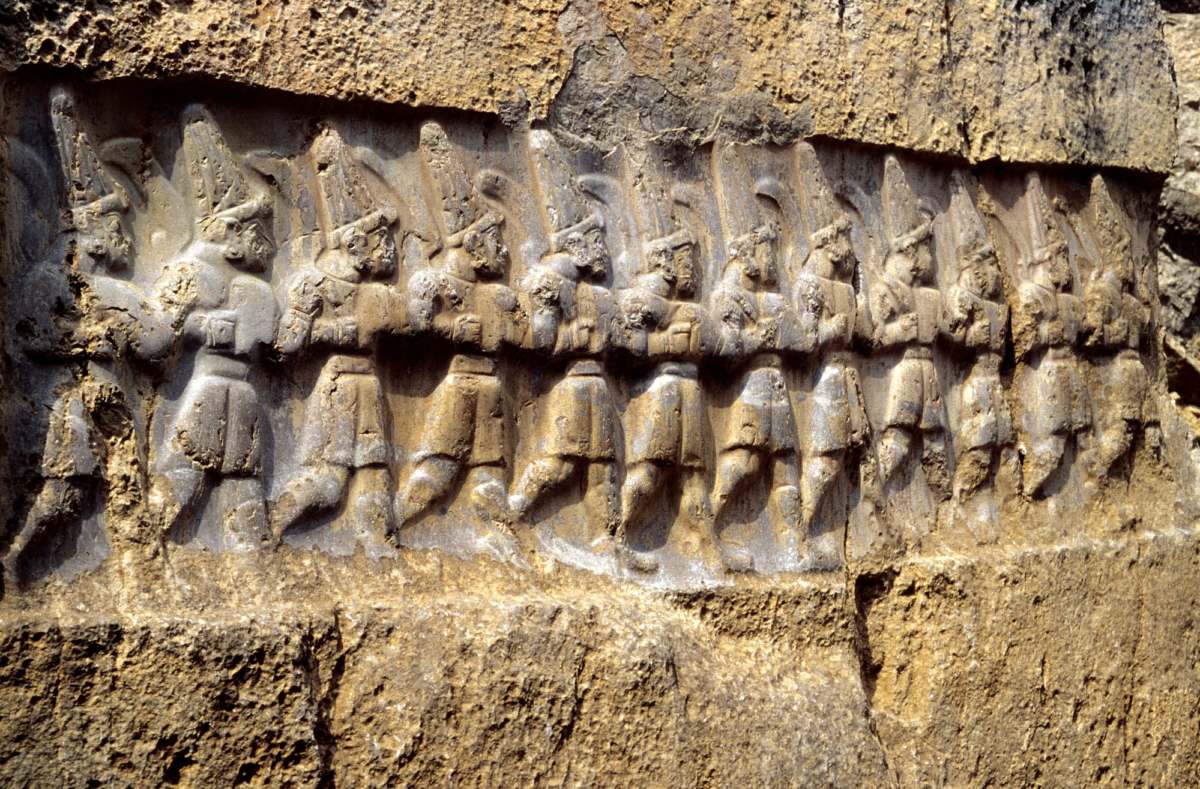
- The Yazilikaya rock sanctuary, 2 kilometers from Hattusha, contains the largest preserved Hittite religious art, with relief carvings of over 90 gods and goddesses processing along the natural rock walls.
- The site requires a car or organized tour to visit, with the closest major cities being Ankara (3 hours) and Cappadocia (2.5 hours). The nearby village of Bogazkale offers basic accommodation.
- Allow a full day for Hattusha and Yazilikaya combined, with at least 4 hours at the main city site walking the 5-kilometer interpretive route.
The Hittite Empire and Why It Matters
The Hittite civilization is one of the great rediscoveries of modern archaeology. For nearly 3,000 years, from the destruction of Hattusha around 1180 BC until the late 19th century, the Hittites were essentially forgotten by history. They were mentioned briefly in the Hebrew Bible (where they appear as one of the peoples Israel encountered in Canaan), and a few references in Egyptian and Assyrian sources, but the actual extent of their empire and the depth of their civilization remained completely unknown.
The Rediscovery
The first hints that something major had been lost came in the 1830s when European travelers in central Anatolia began noticing strange ruins, unknown to the local population, with unusual sculptural styles that did not match any known ancient civilization. The most striking finds were at a site called Bogazkoy (modern Bogazkale), where massive city walls, monumental gates and bizarre rock sculptures suggested a major lost capital.
In 1906, German archaeologist Hugo Winckler began systematic excavations at Bogazkoy and uncovered the royal archives of the city, with thousands of clay tablets written in cuneiform script. The tablets were in multiple languages, including a previously unknown language that Winckler tentatively identified as belonging to the Hittites mentioned in the Bible. Czech scholar Bedrich Hrozny deciphered the Hittite language in 1915, revealing that it belonged to the Indo-European language family, which made it the oldest attested Indo-European language.
The decipherment of the tablets revealed an entire lost civilization. The Hittites had ruled a major empire stretching from the Aegean coast of Anatolia to the upper Euphrates River, with vassal states in northern Syria and diplomatic relations with all the major powers of the Late Bronze Age. Their political structure, religious beliefs, legal system, military organization and royal correspondence were all documented in the tablets, providing one of the most complete pictures of any ancient civilization.
The Three Great Powers
By 1300 BC, three great empires dominated the eastern Mediterranean world. Egypt under the Ramessid dynasty controlled the Nile valley and parts of the Levant. Assyria, expanding from northern Mesopotamia, controlled the upper Tigris and Euphrates regions. The Hittite Empire under the great kings Suppiluliuma I, Mursili II and Hattusili III controlled Anatolia and the northern Levant.
The three powers competed for control of the strategic Levantine coast, with vassal states constantly switching allegiance and proxy wars erupting whenever the balance shifted. The most famous of these conflicts was the Battle of Kadesh in 1274 BC, where the Egyptian army of Ramses II met the Hittite army of Muwatalli II in present-day Syria. The battle ended in a tactical stalemate but a strategic Hittite victory, with Egypt unable to maintain control of the Levantine cities.
Sixteen years after the battle, in 1259 BC, Hittite king Hattusili III and Ramses II signed a formal peace treaty, the first surviving international peace treaty in human history. The treaty established mutual non-aggression, defensive alliance, return of fugitives and trade relations. Copies of the treaty in both Hittite cuneiform and Egyptian hieroglyphs have survived, and a copy of the Akkadian language version (the diplomatic lingua franca of the era) is on display at the United Nations headquarters in New York as a symbol of international diplomacy.
The Sudden Collapse
Around 1200 BC, the entire eastern Mediterranean world collapsed in what historians call the Late Bronze Age Collapse. Cities throughout the region were destroyed by fire, populations migrated chaotically, and major civilizations including the Hittites simply ceased to exist as political entities. The causes are debated, with theories including climate change (drought conditions documented from this period), earthquakes (a major seismic event affecting the region), economic disruption (trade routes broken by Sea Peoples raids) and internal political weakness.
Hattusha was destroyed by fire around 1180 BC, with most of the population apparently dispersing into the surrounding countryside. The site was never reoccupied as a major city, though some areas were used as small Iron Age and Phrygian settlements. The Hittite empire fragmented into a series of smaller successor states (the so-called Neo-Hittite kingdoms) in northern Syria, which preserved some Hittite cultural traditions until the Assyrian conquest of the 8th century BC.
The complete disappearance of the Hittite political and cultural memory from the historical record is one of the most striking facts of ancient history. The Greeks and Romans who later dominated Anatolia had no awareness that a great empire had once ruled the very land they walked on. The Hittite language was forgotten, the script was indecipherable until the 20th century, and the capital city sat empty and ignored for 3,000 years.
The City of Hattusha
The visible city of Hattusha occupies about 180 hectares of mountain terrain, with walls, gates, temples, palaces and residential areas spread across a wide area. The interpretive walking route covers about 5 kilometers and gives you a thorough sense of the city’s organization and grandeur. Allow at least 4 hours for a complete visit.
The Great Temple
The first major monument on the visitor route is the Great Temple, the largest religious building of the Hittite world. The temple complex covers about 14,500 square meters, with the main temple structure itself measuring 65 by 42 meters. The temple was dedicated to the Storm God of Hatti (the chief Hittite deity) and the Sun Goddess of Arinna (his consort).
The architecture is recognizably Anatolian rather than Mesopotamian or Egyptian. The temple is organized around a central courtyard with surrounding rooms for worship, storage, administration and residence for the priests. The walls were built of cut stone for the lower courses and mudbrick for the upper sections, with wooden beams reinforcing the structure against earthquakes.
The temple was decorated with elaborate sculptures, painted plaster and carved reliefs that have largely disappeared but are documented in archaeological reports. The famous “Storm God Stele” with its image of the chief deity, now in the Museum of Anatolian Civilizations in Ankara, originally stood in the temple courtyard. The current visible remains are mostly foundations and lower walls, but the scale and organization are clear.
The Royal Palace and the Citadel
The royal palace and citadel (Buyukkale) sit on a high rocky outcrop in the eastern part of the city, with commanding views over the surrounding mountain country. The citadel was the residence of the Hittite kings and the administrative center of the empire, with archives, throne rooms, ceremonial halls and royal apartments arranged around multiple courtyards.
The royal archives were located on the upper terraces of the citadel. The 25,000 clay tablets recovered by German archaeologists from the archives include royal correspondence (with the Egyptian pharaohs, Babylonian kings and various vassals), administrative records (treasury accounts, military supply lists), religious texts (prayers, rituals, mythological compositions), legal documents (law codes, court records, treaties) and literary works.
The throne room (called the Bit Hilani) was a distinctive Hittite architectural form, with a colonnaded portico opening into a long rectangular hall where the king sat in audience. Versions of the Bit Hilani layout were later copied by the Assyrians and other Mesopotamian cultures, reflecting Hittite architectural influence on the wider region.
Most of the citadel is reduced to foundations and lower walls, but the layout is preserved well enough to understand the royal complex. The dramatic position on the rocky outcrop, with the panoramic views across the city below, gives a sense of the royal power that radiated from this place.
The City Walls and the Postern Gallery
Hattusha was protected by 9 kilometers of city walls, with bastions, gates and watchtowers at regular intervals. The walls are visible along much of their original course, sometimes preserved to substantial heights. The double-wall construction, with parallel walls separated by a fighting platform, was an advanced military design that protected the city against the heavy chariot warfare typical of the Late Bronze Age.
The most unusual defensive feature is the Postern Gallery (Yerkapi), an 80-meter tunnel that runs underneath the southern ramparts. The tunnel was a sally port that allowed defending soldiers to launch surprise attacks against besieging forces, emerging behind the enemy lines at the foot of the city walls. The construction of the tunnel, with its carefully cut stone walls and corbeled ceiling, demonstrates the engineering sophistication of Hittite military architecture.
The tunnel is open to visitors who want to walk through it (about 5 minutes from end to end). The experience is memorable, with the cool stone walls and the realization that you are walking through a 3,200-year-old engineered structure. Bring a flashlight, as the interior is dim.
The Lion Gate, the Sphinx Gate and the Other Monuments
The most photogenic features of Hattusha are the three monumental gates in the city walls, each decorated with massive carved sculptures. These gates are some of the most distinctive examples of Hittite sculptural art and represent the empire at its most visually impressive.
The Lion Gate
The Lion Gate (Aslanli Kapi) in the southwestern part of the city walls is the most iconic Hittite monument. Two massive limestone lions, originally about 2.5 meters tall, flank the gateway. The lions are carved in the round (free-standing sculpture rather than relief), with detailed manes, fierce expressions and forward-facing poses that proclaim the city’s military strength to anyone approaching.
One of the original lions is partly reconstructed using surviving fragments, with the missing sections filled in with neutral material so you can distinguish the original from the restoration. The other lion is preserved in better condition. Both lions are in their original positions at the gate, providing one of the most authentic ancient experiences possible at any archaeological site.
The gate itself is a typical Hittite design with a double doorway, originally closed by massive wooden doors reinforced with bronze. The gate served both ceremonial and military functions, with the lions intended to ward off both human enemies and supernatural threats. Approaching the gate from outside the city walls, you can imagine the visual and psychological impact on ancient visitors and would-be attackers.
The Sphinx Gate
The Sphinx Gate (Sfenksli Kapi), at the highest point of the southern city walls, was originally decorated with four massive sphinx sculptures (combinations of human heads with lion bodies). The sphinxes were carved in the Egyptian style but with distinctly Anatolian features, reflecting the diplomatic and cultural exchange between Hittite and Egyptian courts.
Two of the original sphinxes were excavated by German archaeologists and removed to museums, with one in the Pergamon Museum in Berlin and one in the Istanbul Archaeological Museum. The other two were left at the site and are visible in much weathered condition. Recent restoration work has reassembled the structure with copies of the removed sphinxes, giving a sense of the original visual impact.
The position of the Sphinx Gate, at the highest point of the city walls, provided one of the most dramatic views in the ancient world. From this elevation you can see across the entire city below, out to the surrounding mountains, and (on clear days) for tens of kilometers in every direction. The strategic and symbolic significance of the position is clear.
The King’s Gate
The King’s Gate (Kral Kapisi), on the eastern side of the city walls, was decorated with a single massive relief sculpture of a Hittite warrior (originally identified as a king, hence the name, but now thought to represent a warrior god or guardian figure). The relief is one of the most striking examples of Hittite sculptural art, with the warrior depicted in profile with elaborate clothing, weapons and a distinctive pointed cap.
The original relief is preserved in the Museum of Anatolian Civilizations in Ankara, with a high-quality copy in place at the gate. The carving shows the technical excellence of Hittite sculpture, with subtle modeling of the muscles, detailed depiction of the dress and weapons, and dynamic pose that suggests motion and power.
From the King’s Gate, the original sacred ceremonial road led to the rock sanctuary of Yazilikaya, about 2 kilometers to the east. The road would have been used for major religious processions involving the king, the priests and the divine images. Walking the modern road that approximates this route takes you to one of the most extraordinary religious sites of the ancient world.
Yazilikaya, the Hittite Rock Sanctuary
Yazilikaya (literally “inscribed rock” in Turkish) is the major religious sanctuary of the Hittite Empire and one of the most unusual sacred sites of the ancient world. The sanctuary is a natural rock outcrop where the limestone walls have been carved with relief processions of over 90 Hittite gods and goddesses. The sanctuary is 2 kilometers from the main Hattusha site, in a beautiful natural setting that combines natural rock formations with monumental architecture.
The Two Chambers
Yazilikaya consists of two main chambers carved into the natural rock outcrop. Chamber A, the larger of the two, contains processions of male gods on one wall and female goddesses on the other, all converging on a central composition that depicts the meeting of the chief Storm God of Hatti and his consort the Sun Goddess of Arinna.
The processions include 64 male gods and 18 female goddesses, arranged in hierarchical order from the most powerful at the front to the least at the rear. Each figure is identified by hieroglyphic inscriptions naming the deity, providing one of the most complete documents of Hittite religious belief available anywhere. The gods are depicted with characteristic attributes (weapons, animals, symbols) that allow identification even where the inscriptions are damaged.
Chamber B is smaller and contains a different composition. The most prominent figure is a relief of the goddess Sharruma embracing the Hittite king Tudhaliya IV, with the king depicted in priestly robes rather than warrior dress. The composition is unusually intimate, with the goddess shown holding the king in a protective gesture. The scene probably depicts the divine sanction of the king’s reign, with the god personally guaranteeing his royal authority.
The Religious Function
Yazilikaya was the location of the major Hittite religious festival, the spring New Year festival celebrating the rebirth of nature and the renewal of the divine cosmic order. The festival lasted several days and involved processions of the king, the priests, the divine images and the entire urban population. The site combined religious worship with social bonding and political legitimation.
The natural setting of the sanctuary, with the rock formations and the surrounding forest, suggests deep continuity with pre-Hittite religious traditions of the region. Many cultures throughout history have recognized particular natural locations as sacred, with the rock formations of Yazilikaya having all the visual qualities (dramatic shapes, water sources, isolated position) that often attract religious attention.
The Hittites built up the natural site with monumental architecture (paved courtyards, ceremonial buildings, processional ways) that combined the natural sacredness with the political messaging of royal-divine partnership. The result is a sanctuary that was both genuinely religious and politically functional, with the king’s authority continually reaffirmed through the rituals performed in the divine presence.
Visiting Yazilikaya
Yazilikaya is included in the main Hattusha entry ticket. The drive from the main archaeological site takes about 5 minutes. The sanctuary has a small parking area and visitor entrance. Allow 60 to 90 minutes for a thorough visit including time to study the reliefs.
The reliefs are weathered after 3,200 years of exposure but most figures are still clearly identifiable. Good interpretive signs in English explain the various gods and the religious meaning of the compositions. A small museum at the entrance displays archaeological finds and contextual material.
Bring water and comfortable shoes. The walking is moderate but the chambers can be crowded at peak hours (which here means about 20 visitors total rather than the hundreds you would expect at famous sites). Try to visit in the early morning or late afternoon for the best light and the most peaceful atmosphere.
How to Get to Hattusha and Practical Planning
Hattusha is in the Corum province of central Anatolia, in remote mountain country far from any major cities. The site requires deliberate planning to visit, with no public transport directly to the site and limited accommodation in the nearest village.
From Ankara
Ankara is the closest major city, about 200 kilometers (3 hours by car) southwest of Hattusha. Ankara has Esenboga International Airport with daily flights from Istanbul, Izmir, Antalya and many European cities. The drive from Ankara to Bogazkale (the modern village near Hattusha) is on good highways with clear signage.
Rental cars at Ankara airport cost around 800 to 1,500 Turkish lira per day. Driving gives you the flexibility to combine Hattusha with other central Anatolian sites such as Cappadocia, the Phrygian valleys or the lake district. The drive itself is scenic, passing through agricultural plains, low mountains and small villages.
Public transport options are limited. Direct buses from Ankara to Sungurlu (the nearest town to Bogazkale) take about 3 hours, with onward minibus connections to Bogazkale taking another 30 to 45 minutes. From Bogazkale you need a taxi for the final 3 kilometers to the Hattusha site. The total journey from Ankara takes 5 to 6 hours.
From Cappadocia
Cappadocia, 2.5 hours by car to the south, is the most popular base for visiting Hattusha. Many Cappadocia-based tour operators offer organized day trips to Hattusha and Yazilikaya, with prices around 800 to 1,500 lira per person including transport, guide and lunch. The day is long but rewarding.
For independent travelers based in Cappadocia, renting a car and driving to Hattusha is the easiest option. The drive is straightforward on modern highways. Set out early (06:00 or 07:00) to maximize time at the site and return to Cappadocia by evening. See my Cappadocia guide for more on this part of Turkey.
Where to Stay
The village of Bogazkale, immediately adjacent to the Hattusha site, has a few basic guesthouses and a small hotel. Bogazkale Pension and Asikoglu Hotel are reliable options with prices around 400 to 800 Turkish lira per night including breakfast. The accommodation is modest but the location is unbeatable for an early morning start at the site.
For more comfort, stay in Sungurlu, the larger town about 30 kilometers from Hattusha. Sungurlu has a few mid-range hotels in the 600 to 1,200 lira per night range. The Sungurlu Buyuk Hotel and Hotel Hitit are reliable options.
Many visitors prefer to do Hattusha as a day trip from Cappadocia, returning to their hotel in Goreme or Urgup the same evening. This avoids the need to find accommodation in the rural Hattusha area, though it makes for a long day.
The Visit Itself
Hattusha is open daily from 08:30 to 19:00 in summer and 08:30 to 17:00 in winter. Entry is around 200 Turkish lira for international visitors. The ticket includes Hattusha proper, Yazilikaya and the small museum at the site entrance.
From the parking lot at the site entrance, the interpretive walking route covers 5 kilometers and takes you past all the major monuments. The route is mostly on modern roads suitable for cars, so you can drive between the major monuments if you prefer not to walk the full distance. Driving is recommended in the heat of summer.
Bring water (lots of water), sunscreen, a hat and comfortable walking shoes. The site is exposed with very little shade. The summer temperatures can be extreme. Pack a picnic lunch if you plan to spend the full day, as there are no restaurants or cafes at the site itself.
Frequently Asked Questions
Is Hattusha worth the effort to reach?
For visitors interested in ancient Near Eastern history, absolutely yes. Hattusha is one of the most important archaeological sites in Turkey and gives you a unique experience of a powerful ancient empire that most people have never heard of. The remote location and the absence of crowds add to the atmosphere. For visitors focused on the famous tourist sites of Turkey, Hattusha may not be a priority on a first trip.
How long does a Hattusha visit take?
A thorough visit including the main city, Yazilikaya and the small museum takes 5 to 6 hours. A focused 3-hour visit covering just the main monuments is possible if you are short on time. With a full day you can take a relaxed pace and explore the site thoroughly.
Is the site accessible for older visitors?
Partially. The main monuments can be reached by car, so you can drive between them and walk only short distances at each stop. The Postern Gallery tunnel and the steep slopes around some structures may be difficult for visitors with mobility issues. Plan a car-based visit if walking is challenging.
What is the best time to visit?
April, May, September and October offer the best weather. Spring (April-May) brings wildflowers across the mountain country, making the visit particularly beautiful. Summer (June through August) is very hot with little shade. Winter visits are possible but cold (temperatures often below freezing) and some areas may be inaccessible due to snow.
Can I combine Hattusha with other sites?
Yes, the most popular combinations are with Cappadocia (2.5 hours south) or Ankara (3 hours west). For ambitious travelers, combining Hattusha with the Phrygian valley sites near Eskisehir creates a deep dive into pre-classical Anatolian civilization. The Museum of Anatolian Civilizations in Ankara, which houses many of the original Hittite artifacts from Hattusha, is the essential museum visit to combine with the site.
Are there guides available at the site?
A few licensed guides operate from the Bogazkale village, available for hire at the site entrance for around 600 to 1,200 lira for a half-day tour. The guides have varying levels of English and Hittite-history knowledge. For deeper guided experience, bring a private guide from Ankara or Cappadocia. The on-site interpretive signs are good and detailed, so an unguided visit is also rewarding for prepared visitors. The UNESCO World Heritage listing for Hattusha provides excellent background reading.
About the Author
I’m Ilknur Acar, the founder of Bir Dakikada Geziyorum. Hattusha is the archaeological site in Turkey that most visitors have never heard of, and the one that consistently impresses serious travelers the most. The combination of the lost-and-rediscovered Hittite civilization, the remote mountain setting and the absence of crowds creates an archaeological experience unlike any other in the country. I write history-rooted travel guides that respect the layered past of Turkey and the eastern Mediterranean. Follow along for more.