Last Updated: 17 May 2026
Kas is the small Mediterranean town that travel writers always describe as “the one Turkish resort that did not sell out.” I have been visiting Kas since 2014, and somehow it has stayed true to that description while everything around it has been built up, packaged and converted into bottle-service nightclubs. The reason is partly geography, the town is at the end of a 30-kilometer dead-end peninsula road with no airport nearby, and partly a strict local building code that has kept the historic core intact. The result is a place where you can walk down to the harbor on a July evening and find Turkish families eating fish at plastic tables next to German divers showing each other underwater video, with no neon signs in sight.
In this guide I will share the diving that has made Kas famous, the Kekova sunken city across the bay, the Lycian rock tombs above the harbor, and the boat trips and day hikes that fill out a Kas holiday. I will tell you which restaurants are actually worth the money, where to stay in different budget ranges, and how to time your visit to catch the best of the town without the worst of the heat.
Key Takeaways
- Kas is the unofficial diving capital of Turkey, with over 20 dive sites including wrecks from World War II within 30 minutes of the harbor.
- Kekova, a partially sunken Lycian city, is reached by a 90-minute boat trip from Kas and is one of the most atmospheric ancient sites in Turkey.
- The Hellenistic Theater above Kas seats 4,000 spectators and is open for free, with the best sunset views in town.
- The Lion Tomb (Aslan Mezari) in the town square dates from the 4th century BC and is one of the best-preserved Lycian sarcophagi in situ.
- Kas has no large beaches in the town itself, the main swimming options are the Buyuk Cakil cove and boat trips to Patara, Kaputas and the nearby islands.
- The town is car-free in the historic core, which gives evenings a relaxed walking atmosphere unusual for the Turkish coast.
Diving the Lycian Coast, Why Kas Is the Best in Turkey
The waters around Kas have been a diving destination since the 1980s, when local pioneer Dincer Ulug opened the first dive school in town. Today there are around 15 dive operators in Kas, ranging from small one-boat outfits run by local diving veterans to larger international schools. What sets Kas apart from other Turkish dive destinations is the combination of clear water (visibility regularly 25 to 30 meters), interesting topography (drop-offs, caves, walls, swim-throughs) and historical wrecks from multiple eras.
Best Dive Sites for All Levels
For beginners, the Limanagzi dive site, just 10 minutes by boat from the harbor, offers shallow reefs at 5 to 15 meters with abundant marine life. You can see octopus, moray eels, scorpionfish and the occasional sea turtle. It is a perfect first-dive location after your discovery course or as the second dive of a day for certified divers easing into the trip.
For intermediate divers, Big Cave is a popular spot where you swim through a cavern at 18 to 25 meters, with light coming down through the entrance creating a blue cathedral effect. The cave is wide enough that you never feel confined, and there is no overhead environment beyond the entrance chamber, so it is suitable for divers with basic open-water certification. Most operators do this dive as part of a two-tank morning trip.
For advanced divers, the wreck of the Dimitri C, a Greek freighter that hit a Maltese plane during World War II and sank, lies at 23 to 38 meters off Hidayet Bay. The hull is intact and you can swim along the deck, look into the bridge and see the boilers. Coral and sponges cover much of the wreck and large schools of barracuda hang around the bow. This is a memorable dive that requires advanced certification and a guide who knows the structure.
How to Book a Dive
You can book dives at any of the operators along the harbor or through your hotel. Walking the harbor in the morning is the best way to compare boats and meet the dive masters before you commit. A standard two-tank day costs around 1,800 to 2,500 lira depending on the operator and whether equipment rental is included. Lunch on the boat is usually included.
If you do not have a diving certification, you can do a Discovery Scuba Diving experience that includes a short briefing, a pool or shallow practice session, and one easy open-water dive supervised by an instructor. The cost is around 1,500 lira and the experience is suitable for anyone over 10 years old in good health. Open Water Diver certification courses run for 3 to 4 days and cost around 8,000 lira including all equipment, materials and certification fees.
For experienced divers, the Tek Diving Center and BT Diving School are two of the longest-established operators with good safety records. Both have multi-lingual instructors, modern equipment and detailed knowledge of the dive sites. The Kas Diving Center is a third option, popular with Turkish divers and slightly more budget-friendly. All three are PADI-affiliated and follow standard international safety protocols.
When the Diving Season Runs
The diving season in Kas runs from April to November, with peak conditions from June to September. Water temperatures vary from 16 degrees Celsius in April (drysuit or thick wetsuit needed) to 27 degrees in August (3mm wetsuit sufficient). Visibility is best in May-June and September-October, with the water clearest after winter storms have settled and before the summer algae bloom.
July and August can have slightly reduced visibility (still 15 to 20 meters) due to plankton, but the warm water and long daylight hours make them popular months. Winter diving is possible for the dedicated but most operators are closed from December to March. If you want to combine diving with general beach holiday weather, late May to mid-October is the sweet spot.
Plan to arrive in Kas at least three days before any planned diving so you can dive on multiple days. Many operators offer multi-day packages with discounts after the third dive. If you are flying soon after, remember to leave at least 18 to 24 hours between your last dive and your flight to avoid decompression sickness in the cabin altitude.
Kekova, the Sunken Lycian City
Across the bay from Kas, about 30 kilometers by sea or 70 kilometers by road, lies one of the most evocative ancient sites in the Mediterranean. Kekova is an island sheltering a sunken ancient city, where Lycian house foundations, sarcophagi and harbor walls slope down into the clear water and continue below the surface. An earthquake in the 2nd century AD dropped the eastern shore of the island by several meters, and the part of the city that was once on land is now partly underwater, partly above.
What You See on the Boat Trip
The standard Kekova boat trip leaves from Kas harbor around 09:00 in the morning and returns around 18:00. The boat sails east along the coast, past the village of Ucagiz, and into the protected channel between Kekova island and the mainland. The water is calm, glass clear and deep turquoise. You glide slowly along the eastern shore of the island and watch the ancient ruins pass beneath you.
The boats have glass-bottom panels on the floor so you can see the sunken city without snorkeling. You can clearly make out staircases descending into the water, foundations of small buildings, broken column drums and amphora shards. Swimming and snorkeling are not allowed in the immediate area of the ruins, to protect the site, but the boats stop nearby for swimming breaks in deep clear water.
The most photographed feature of Kekova is the Lycian sarcophagus rising out of the water at Aperlae, a half-submerged stone coffin with its arched lid still intact. The sarcophagus has been a symbol of Turkish underwater archaeology for decades and appears on every brochure for the Lycian coast. Standing on the boat deck looking down at it, you understand why. It is a perfect image of how Anatolian civilization mixed with the sea, with no clean line between human structures and the natural world.
Kalekoy and Simena Castle
After Kekova, most boat trips stop at Kalekoy, a tiny village on the mainland that is only accessible by boat. Kalekoy sits at the foot of a hill topped by a small Byzantine castle, built on top of older Lycian fortifications. The climb to the castle takes 15 minutes on a stepped path and the view from the top, with Lycian sarcophagi in the foreground, sunken city in the middle distance and snow-capped mountains beyond, is one of the great panoramic views of Turkey.
The castle interior contains the smallest classical theater in Anatolia, with just seven rows of seats carved into the rock. Local guides like to say it could seat the entire population of ancient Simena, which gives you a sense of the village scale. Wandering around the castle takes another 15 minutes, then you can climb back down to the village for lunch.
The village restaurants serve simple Turkish food, mostly grilled fish, salads and meze. Eating at a table on a wooden platform over the water, looking across at Kekova island, is one of the highlight experiences of the day. Prices are higher than in Kas because everything has to be brought in by boat, but the location justifies the premium. After lunch the boat returns to Kas via a different route, with more swimming stops along the way.
Booking the Kekova Trip
You can book through any of the boat operators at the Kas harbor or through your hotel. Group tours cost 700 to 1,000 lira per person including lunch. Private boat charters cost around 6,000 to 12,000 lira for a boat that can accommodate up to 12 people, which becomes economical for families or groups of friends.
Some operators offer sailing boat trips instead of motor yachts, which take a bit longer but are quieter and more atmospheric. The Olympos Yat sailing trips include a stop at the smaller, less visited Gokkaya Bay where the snorkeling is excellent. If you have done the standard motor boat trip on a previous visit and want something different, this is the upgrade worth considering.
If you prefer not to spend a full day on a boat, you can also reach Kekova by car. Drive 70 kilometers east to Ucagiz village and take a smaller boat from there, an hour out and an hour back, which gives you the same sunken city experience without the long sail from Kas. Combine with a visit to the inland Lycian ruins at Myra and the Church of Saint Nicholas in Demre for a full day of archaeology.
The Hellenistic Theater, Lion Tomb and Ancient Antiphellos
Modern Kas is built on top of ancient Antiphellos, a Lycian port city that became important in the Hellenistic and Roman periods. Most of the ancient city is buried under the modern town, but several major monuments are still visible and freely accessible. Walking between them is the best way to get a feel for ancient Antiphellos and to escape the harbor crowds for an hour or two.
The Hellenistic Theater
Walk west from the harbor for about ten minutes along the coastal road and you reach the Hellenistic Theater, carved into a hillside facing the sea. The theater dates from the 1st century BC and could seat 4,000 spectators. Unusually for an ancient theater, the stage building is gone but the auditorium is in excellent condition, with 26 rows of stone seats still in their original positions.
The view from the top row, looking down through the columns of the missing stage to the sea and the Greek island of Meis (Kastellorizo) just five kilometers offshore, is the best in town. I always come up here in the late afternoon, sit on the stone seats and watch the sunset color the water and the island. There is no entrance fee, no guard, no ticket booth, just an empty Greek theater open to anyone who walks up the hill.
The theater hosts occasional summer performances of music and drama. The acoustics are still functional after 2,100 years, and a singer or speaker at the orchestra level can be heard clearly throughout the auditorium. Check the Kas culture website for the summer program if you visit in July or August, the performances are usually free and they add a magical layer to a place that already feels alive.
The Lion Tomb in the Town Square
The most striking ancient monument in central Kas is the Lion Tomb (Aslan Mezari), a Lycian sarcophagus standing in the small square in front of the post office. The tomb dates from the 4th century BC and consists of a base, a sarcophagus chamber and an arched lid carved with two lion heads at each end. The lions give the tomb its name and were a Lycian protective symbol, guarding the dead from evil spirits.
Inscriptions on the side of the tomb are in the Lycian script, an alphabet derived from Greek but with additional characters for sounds the Greek alphabet did not have. The Lycian language was only fully deciphered in the late 20th century thanks to inscriptions like this one and the Trilingual Stele in nearby Letoon. The text on the Lion Tomb names the family who owned it and includes a curse against anyone who would disturb the burials inside, a common feature of Lycian tomb inscriptions.
The tomb is right in the middle of the modern town, surrounded by cafes and shops, with people walking past it all day without giving it a second glance. This is part of the charm of Kas. The ancient and the modern share the same streets, and a 2,400-year-old tomb is just another piece of street furniture. Take a coffee at one of the surrounding cafes and watch the daily life flow around the monument, it is a very Turkish experience.
The Rock Tombs Above the Town
Walking up the steep streets behind the town center, you reach the cliff face where dozens of Lycian rock tombs are carved into the limestone. These are smaller and simpler than the famous Amyntas Tomb in Fethiye, but the cluster is impressive and many are accessible by short climbs over rocks. Bring closed-toe shoes for the loose stones and watch your footing.
The largest tomb, often called the Doric Tomb because of its two simple Doric columns, has a barrel-vaulted chamber inside with stone benches along three walls where the bodies would have been laid. The walls and ceiling are smoke-blackened from later use as a shepherds’ shelter, a reminder of the long second life of ancient monuments after their original purpose was forgotten.
From the tombs you can continue up the hill to a viewpoint overlooking the entire town and bay. The walk is steep and takes about 20 minutes from the town center, but you are rewarded with a sweeping view of Kas harbor, the peninsula stretching west toward Patara, and the open Mediterranean. This is another good sunset spot if you want a different angle from the theater. Bring water, the route has no fountains.
Where to Stay, Eat and Spend a Slow Evening
The pleasure of Kas is mostly in the small things, where you choose to have breakfast, which alley you wander down after dinner, which harbor restaurant has the best view of the sunset. The town rewards visitors who slow down and let the place set the pace, rather than treating it as a checklist of attractions. Here is how I structure my own days.
Where to Stay
For the historic core experience, stay in one of the small boutique hotels in the streets immediately behind the harbor. The Patara Stone House, Hotel Kayahan and Aqua Princess Hotel are three established options with good service, sea views and walking distance to everything. Prices range from 1,800 to 4,000 lira per night in summer, less in shoulder season.
For something quieter, consider a guesthouse in the Cukurbag Peninsula, the spit of land that extends west of the town. These properties are 10 to 15 minutes by car or scooter from the center, but they have their own private swimming platforms in coves with absolutely clear water. Hotels like Habesos Hotel and Aqua Princess Hotel Cukurbag offer this kind of secluded beach-side stay.
For budget travelers, several pensions and small hotels in the back streets offer simple rooms with breakfast for around 800 to 1,200 lira per night. Olive Garden Pension and Pinar Pansiyon are both well rated. Hostels are limited in Kas compared to bigger Turkish destinations, with only one or two true backpacker options.
Where to Eat
Bahce, in the narrow back streets behind the harbor, is the most famous restaurant in Kas and deservedly so. The menu is modern Turkish, with a focus on Aegean fish and seasonal vegetables. The garden setting under fig trees is romantic, and the wine list features good Turkish bottles from Bornova and Cappadocia regions. Reservations essential in summer. Expect to pay around 800 to 1,200 lira per person for a three-course meal with wine.
Cafe Merhaba is the local breakfast institution, a small place with outdoor tables in the main shopping street. Order the full Turkish breakfast and a fresh-squeezed pomegranate juice, then watch the town wake up around you. Prices are reasonable (around 300 lira per person for a generous breakfast) and the quality is consistent.
For an evening drink, head to the rooftop of Bracconieri Wine House or to the terrace of Smileys Restaurant. Both have sunset views over the harbor and the Greek island of Meis. Wine prices are higher than at restaurants but the views compensate. After dinner, the harbor promenade is the local evening parade route, with families and couples walking up and down between 21:00 and midnight, stopping for ice cream and conversation.
Day Trips Worth Building Into Your Itinerary
From Kas you can take a ferry to the Greek island of Meis (Kastellorizo), the closest Greek island to mainland Turkey. The ferry takes 15 minutes and runs daily in summer. Meis is a tiny island with just 500 permanent residents, but the colorful harbor and the famous Blue Cave just offshore make it a memorable half-day trip. Bring your passport, the island is technically Greece and customs procedures apply on both ends.
Kaputas Beach, 20 kilometers east of Kas, is one of the most photographed beaches in Turkey, a small wedge of white pebbles between high red cliffs with bright turquoise water. The beach has a steep stair access (around 200 steps down) and no facilities beyond a small kiosk. Bring water and shade. The dolmus from Kas runs hourly in summer.
Patara, 40 kilometers west, has an 18-kilometer continuous sand beach (one of the longest in the Mediterranean) and a major Lycian ancient city with theater, parliament building and triumphal arch. You can combine beach and ruins in one long day, with the ruins in the morning and the beach in the afternoon. The dolmus runs every 90 minutes from Kas otogar. For the Aegean coast continuation, see my Fethiye guide and Bodrum guide.
How to Get to Kas and Practical Planning
Kas is the most remote of the major Turkish coastal resorts, which is part of what has kept it quiet. There is no airport in the town, the closest options are Antalya and Dalaman, both about 200 kilometers away. The drive in either direction is slow but beautiful, with the coastal road tracing the Lycian shore through pine forests and past tiny harbors.
From Antalya Airport
The drive from Antalya to Kas takes about 3.5 hours on the D400 coastal road via Demre and Finike. The road is paved, well marked and has many pull-offs for photographs. Renting a car at Antalya airport for around 1,200 lira per day gives you the most flexibility, especially if you plan day trips to Kekova, Patara and Kaputas. International rental chains have desks in the airport.
By bus, Kamil Koc and Pamukkale Turizm both run direct services from Antalya otogar to Kas, taking about 4 hours. Tickets cost around 350 lira. Buses depart roughly every 90 minutes during the day. The buses are comfortable with air conditioning, water service and a wifi connection, though the wifi is often weak in the mountain stretches.
For more luxury, you can also book a private transfer from Antalya airport to Kas for around 3,500 to 5,000 lira. The driver waits at arrivals, helps with luggage and takes you door-to-door. This is the easiest option if you arrive late at night or with small children.
From Dalaman Airport
From Dalaman, the drive to Kas takes about 2.5 hours via Fethiye on the D400. The route is slightly shorter and less mountainous than the Antalya approach. Renting a car is again the most flexible option. Direct buses from Dalaman otogar to Kas are less frequent than from Antalya, but they do exist and take about 3 hours.
If you are visiting Fethiye before Kas, the bus between the two takes about 90 minutes and costs around 150 lira. This is the easiest connection in the region. You can spend a few days in Fethiye, then continue east to Kas, then continue east again to Antalya for your departure flight. This three-stop Mediterranean coast route is the classic Turkish Riviera circuit.
Getting Around Once You Arrive
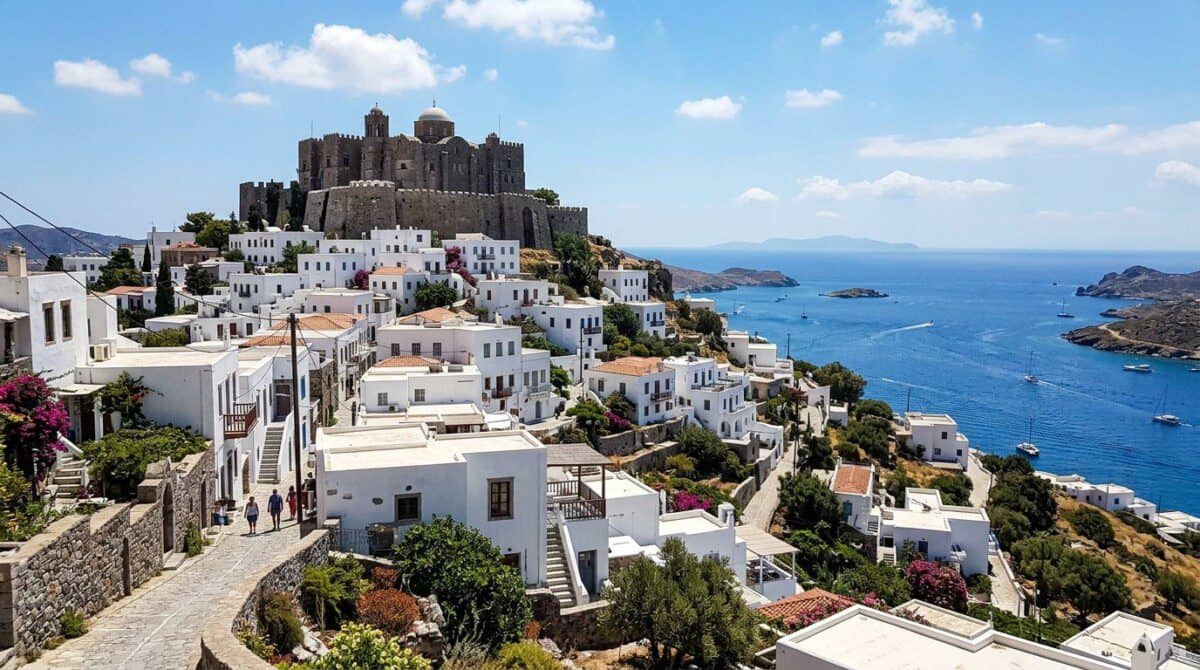
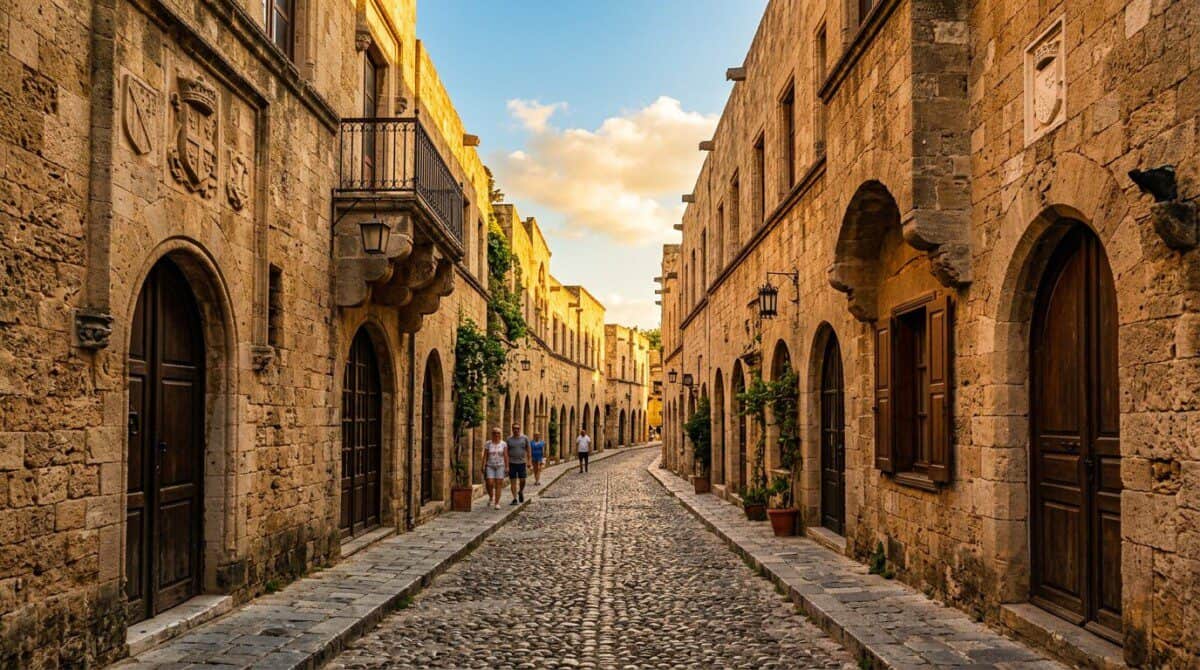
Central Kas is small enough to walk everywhere. The historic core is car-free, with narrow streets paved in stone and lined with whitewashed houses and bougainvillea vines. From the harbor to the theater is a ten-minute walk, from the harbor to the Lion Tomb is two minutes. You will not need any motorized transport within the town.
For day trips to nearby beaches and villages, the dolmus (shared minibus) system covers all the local destinations. Dolmuses leave from the Kas otogar (bus station) at the western edge of the town center. Schedules are posted at the otogar and tickets are paid to the driver in cash, usually 30 to 100 lira per ride. The dolmus is the local transport solution for cheap, frequent rides.
For more independence, you can rent a scooter for around 400 lira per day from one of the rental shops near the harbor. Scooters are useful for reaching the Cukurbag peninsula coves and small bays inaccessible by dolmus. Wear a helmet (mandatory and provided), carry your international driving permit, and ride defensively. Turkish roads can be surprising and Kas drivers know the curves better than you do.
Frequently Asked Questions
How many days should I spend in Kas?
Four to five days is ideal, allowing one day for the Kekova boat trip, one or two days for diving or other water activities, one day for the town itself and surrounding ancient sites, and one or two relaxed beach days at Patara or Kaputas. With a week you can add a longer day trip to Meis island in Greece, or build in two more relaxed beach days for unwinding before flying home.
Is Kas suitable for non-divers?
Yes, absolutely. While diving is the activity Kas is most famous for, the town offers plenty for non-divers, boat trips, ancient ruins, mountain hikes, beautiful beaches within day-trip distance, and a lovely town atmosphere. Many visitors come to Kas without diving at all and have a perfect holiday. The town does not feel like a divers-only destination.
Can I do day trips to Greece from Kas?
Yes, the ferry to Meis (Kastellorizo, Greece) runs daily in summer and takes 15 to 20 minutes. The cost is around 1,000 lira return per person plus a small island visitor fee. Bring your passport. You spend the day on the small Greek island and return to Kas in the evening. The Blue Cave boat trip on Meis is famous and worth the extra time, allow at least 4 hours on the island.
When is the best time to visit Kas?
May, June, September and early October are the best months for combining good weather, warm sea, manageable crowds and full availability of restaurants and boat tours. July and August are hot (35+ degrees Celsius) and busier, but the town never feels overcrowded like some Turkish resorts. April and late October are quieter and cooler, with some restaurants and dive operators closed for the season.
Is Kas safe for solo travelers and women?
Yes, Kas is one of the safer destinations on the Turkish coast for solo travelers and women. The town is small, the locals know each other, and the tourist crowd skews toward older couples, families and divers rather than the party crowd you find in Bodrum or Antalya. Walking alone at night feels safe and you will not encounter the persistent street touts common in larger resorts.
What ancient sites should I see beyond Kekova?
The Lycian sites of Myra (rock tombs and theater) and Patara (theater, parliament and beach) are both within day-trip range of Kas. Tlos, an older Lycian city with rock tombs and a citadel, is 2 hours away inland near Saklikent. Xanthos, the former Lycian capital, is 1.5 hours away. You can also see UNESCO documentation on Xanthos and Letoon for context on their significance. For more of the Lycian coast, see my Fethiye guide.
About the Author
I’m Ilknur Acar, the founder of Bir Dakikada Geziyorum. Kas is the Turkish coastal town I return to most often, partly for the diving and partly because the town has somehow stayed small and human-scaled while everything around it has scaled up. I write history-first travel guides that respect the layered past of these places. Follow along for more.