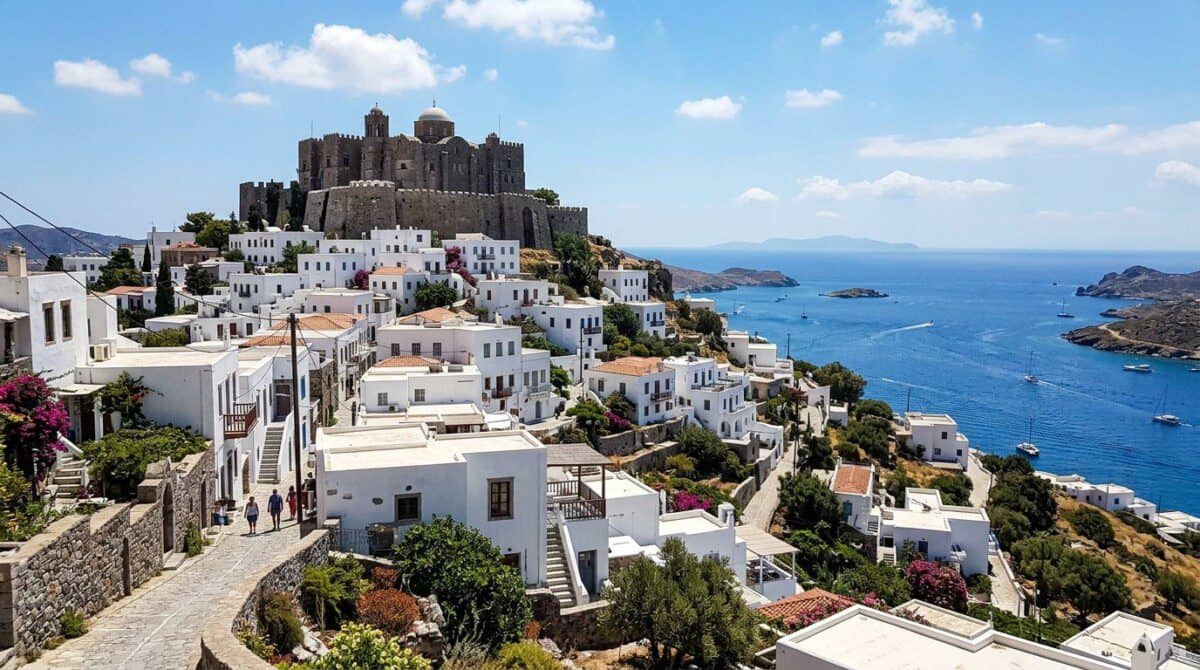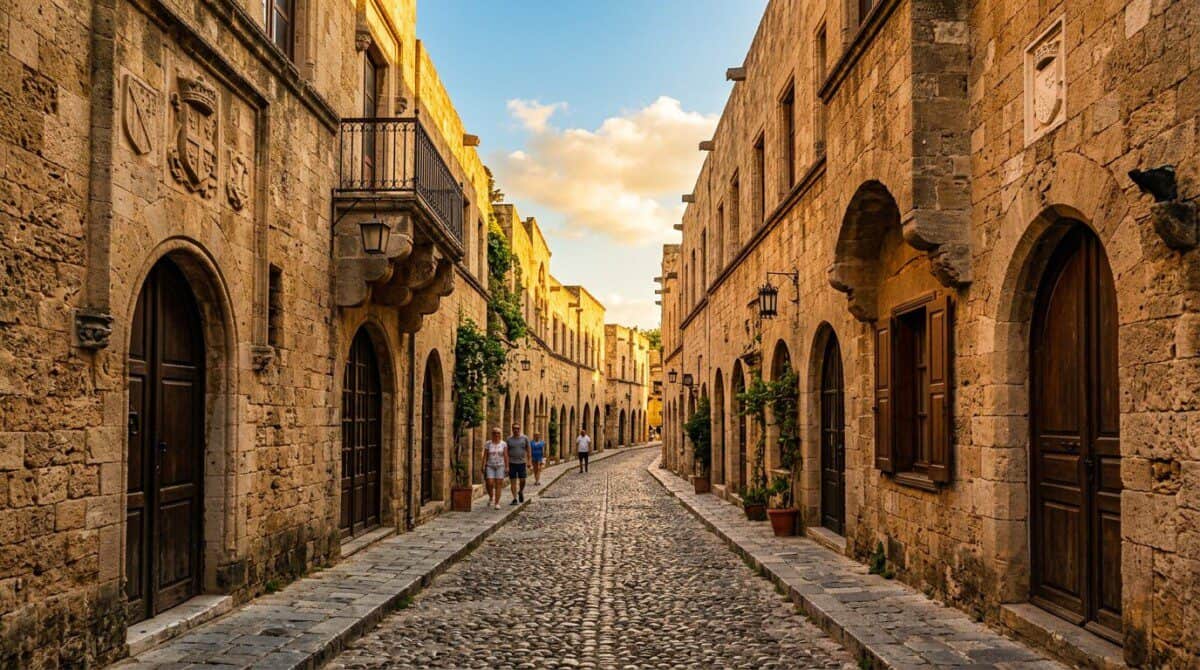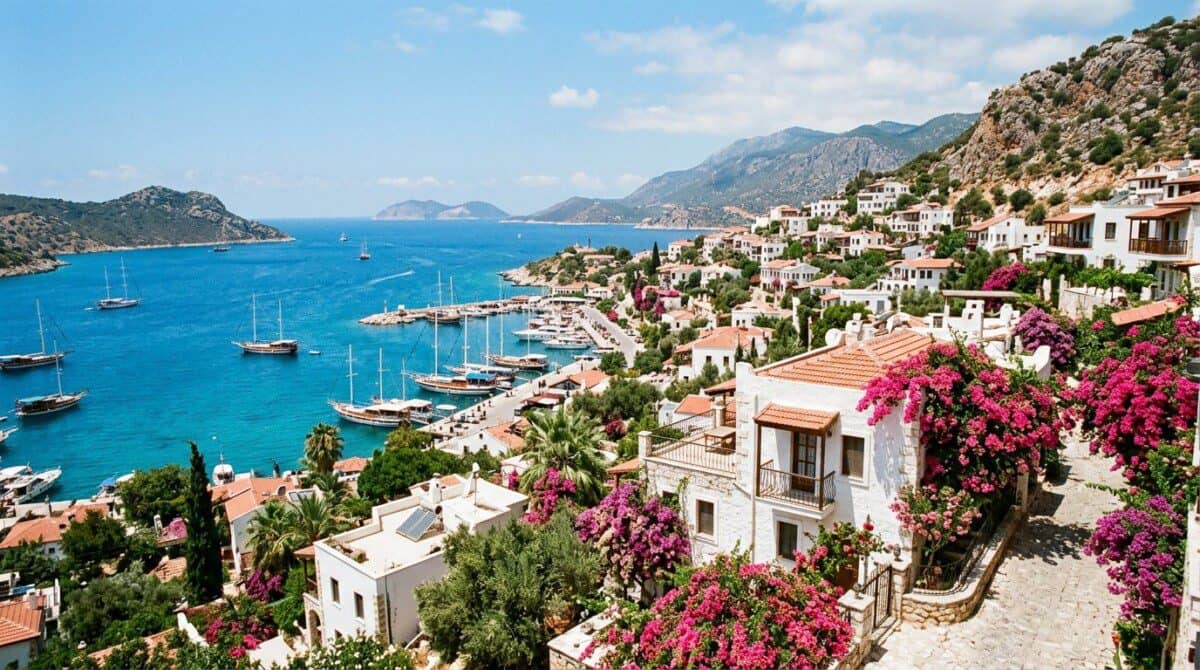
Antalya Old Town, known locally as Kaleici, is the kind of place where 22 centuries of port history have layered themselves into a single small peninsula. The streets are narrow and cobbled, the wooden Ottoman houses lean over the lanes, and around every corner you find something unexpected: a Roman triumphal gate, a fluted Seljuk minaret, a half-ruined Byzantine basilica, a tea garden hidden behind a wooden door.
Last Updated: 17 May 2026
Key Takeaways
- Kaleici is the historic core of modern Antalya, founded by Pergamene king Attalos II in 158 BCE
- Hadrian’s Gate (Üç Kapılar) is a triple-arched marble gateway built in 130 CE to mark emperor Hadrian’s visit to the city
- Yivli Minare, built in 1230 by Seljuk sultan Alaeddin Keykubat, is the most photographed landmark and a UNESCO tentative-list candidate
- The old harbor (Yat Limani) was the only access point to Antalya by sea for over 1,800 years
- Antalya Archaeology Museum, 2 km west of Kaleici, holds 15 colossal Roman marble statues from nearby Perge
- The pedestrian old town fits inside an area you can walk across in 20 minutes, but rewards two full days of exploration

Hadrian’s Gate and the Entrance to Kaleici
The primary entrance to Antalya Old Town is Hadrian’s Gate (Üç Kapılar in Turkish, literally “Three Gates”). The triple-arched marble gateway is the single most photographed monument in Kaleici, and it makes the perfect starting point for any walking tour because everything else in the old town fans out from this small square.
The History of the Gate
Hadrian’s Gate was built in 130 CE to commemorate emperor Hadrian’s visit to the Roman province of Pamphylia. The structure is made of Proconnesian white marble, with three arched openings, four Corinthian columns, and the original imperial dedication inscription still partly visible on the central frieze.
The gate is part of the original Roman defensive wall that surrounded Antalya. The wall was reinforced in the Byzantine period and again under the Seljuks, but the gate itself was paradoxically buried inside an Ottoman defensive expansion that hid it for centuries. It was rediscovered and exposed in the early 20th century.
Stand on the marble paving stones under the central arch and look down. The deep ruts in the stone are 1,900 years of foot and cart traffic. You are walking the same path Hadrian and his retinue used on the day the gate was dedicated.
The Two Towers on Either Side
Hadrian’s Gate is flanked by two towers from different eras. The southern tower (Hidirlik direction) is largely Hellenistic in its foundations, modified during the Roman period. The northern tower, known as Julia Sancta Tower, was added in the Roman period and reinforced under the Byzantines.
The contrast between the two towers gives you a quick visual lesson in the layering that defines Kaleici. The same defensive line was built by Hellenistic kings, Roman emperors, Byzantine governors, and Seljuk sultans, each layer using older stone as foundation for new construction.
Walking around the towers, look at the masonry seams. You can identify the different building periods by the size and dressing of the stone blocks. It is one of the most accessible architectural archaeology lessons in Turkey, taught simply by walking around a single intersection.
Best Photo Angles
The most photographed view of Hadrian’s Gate is from the western side, looking back through the three arches with the morning sun behind you. The early light catches the marble, the carved details on the column capitals show clearly, and there are fewer people in the frame before 09:00.
For a different angle, climb a few steps up the southern tower’s external stair. From this slightly elevated position you can frame the gate with the modern Atatürk Boulevard fountain behind, giving a sense of how the 2nd-century structure now sits inside a modern city.
Evening light works too, with warmer tones from the west, but the gate sits in shadow after about 17:30 in summer because the surrounding buildings block direct sunlight. Morning is the better window for clean photographs.
The Old Harbor and Hidirlik Tower
The narrow streets of Kaleici eventually spill downhill to the old harbor, the Yat Limani. This small horseshoe of moored yachts and traditional gulets was Antalya’s only port for over 1,800 years, from the founding of the city through the late 19th century.
The Harbor’s Role in Mediterranean Trade
Antalya was founded by Attalos II of Pergamon in 158 BCE specifically because of this harbor. The natural cove sits at the western edge of the Pamphylian plain, protected from the prevailing southerly winds by the city’s clifftop position. For centuries it served as one of the main eastern Mediterranean ports linking Anatolia to Cyprus, Egypt, and the Levant.
Today the harbor is purely for tourist boats, fishing day-trippers, and private yachts. The commercial port moved to a larger industrial site east of the city in the 1980s. The historic harbor’s compact size, originally a function of ancient shipping needs, is now what gives Kaleici its photogenic intimacy.
For travelers who want to see the harbor from the sea, boat tours leave throughout the day. A 90-minute coastal tour past the old town cliffs costs around €10 to €15 per person; longer 5-hour trips including swimming stops at nearby coves run €25 to €40.
Hidirlik Tower at Sunset
At the southern end of Kaleici’s defensive walls, Hidirlik Tower is a 14-meter cylindrical Roman tower from the 2nd century CE. Its original purpose is debated. Some archaeologists believe it served as a lighthouse, others as a watch tower over the harbor approach, others as a mausoleum for a wealthy Roman family.
Whatever its original function, the tower today is the single best free viewpoint in Antalya. From the platform around its base, you look out across the old harbor, along the cliffs, and southwest toward the Bey Mountains rising in the distance.
Come at sunset. The cliffs turn pink, the sea turns gold, and the gulets in the harbor below catch the last light. There are no entry restrictions, and a few small cafes and a tea garden sit within 30 meters of the tower if you want to extend the view with a drink.
Karaalioglu Park and the Cliff Path
Adjacent to Hidirlik Tower, Karaalioglu Park stretches along the cliff edge for almost 700 meters. The park has shaded benches, mature pine and palm trees, and a continuous walking path with sea views the entire length. It is the most peaceful stretch of green space in central Antalya.
Walk the path slowly toward the western end, where stairs descend the cliff to small swimming platforms below. The Mediterranean here is deep right at the edge of the cliff, with no beach but excellent jumping-off points for swimmers. Lockers and changing facilities are basic but functional.
For families with children, the park’s playground area is at the eastern end, near the tea garden. The combination of cliff views, shade, and play area makes it the local Antalyan family weekend spot.
Yivli Minare and the Religious Layers of Kaleici
Antalya’s most recognizable landmark is not a Roman gate or an Ottoman mansion but a fluted brick minaret built by a Seljuk sultan in 1230. Yivli Minare stands 38 meters tall, decorated with turquoise glazed tiles near the top, and rises from a complex that layers Byzantine, Seljuk, and Ottoman religious architecture into a single site.
The Minaret and Its Construction
Yivli Minare (“Fluted Minaret”) was commissioned by Seljuk sultan Alaeddin Keykubat I in 1230, immediately after the Seljuk conquest of Antalya. The fluted vertical ribs of the minaret are constructed from red brick, decorated with bands of Konya-style turquoise tile near the upper levels.
The construction style is unusual for the period. Most contemporary Anatolian minarets were stone, and the Yivli design appears to draw on Persian Seljuk architectural traditions rather than local Roman or Byzantine precedents. The minaret has become so closely associated with Antalya that it appears on the city’s official emblem.
The base of the minaret rests on the foundations of an earlier Byzantine basilica. This is typical of the period: incoming Seljuk patrons frequently reused existing Christian religious sites rather than starting from scratch. The full archaeological record of the site reads like a textbook on religious layering in medieval Anatolia.
The Surrounding Complex
The Yivli Minare Mosque next to the minaret is from the 14th century Ottoman period, built when Antalya passed from Seljuk control to the Hamidid emirate and then to the Ottoman Empire. The mosque is small, modest, and still active for daily prayers.
Within 100 meters of the minaret, the complex includes the Mevlevi dervish tekke (lodge), now converted to a small museum, and two stone tombs (Ahi Yusuf Türbesi and Zincirkiran Mehmet Bey Türbesi) holding the remains of Antalyan religious notables from the 14th and 15th centuries.
Allow 45 to 60 minutes for the full complex. Photography is permitted inside the museum, though shoes must be removed before entering the mosque.
Kesik Minare: The “Broken Minaret”
Kesik Minare, a few minutes’ walk from Yivli, is one of the most layered structures in Antalya. The building began life as a 2nd-century Roman temple, was converted into a 5th-century Byzantine basilica, became a mosque after the Seljuk conquest, was reconverted into a church briefly during the Cyprus Crusader period, then back into a mosque before a fire in the 19th century left it in its current ruined state.
The truncated minaret gives the building its modern nickname. The original Roman foundations, the Byzantine apse, the Seljuk-era doorway, and the Ottoman additions are all visible at different points around the structure, making this one of the most genuinely complex archaeological puzzles in central Antalya.
The site is open, free to enter, and almost always empty of tourists. It is one of my favorite spots in the entire old town because the quiet atmosphere amplifies the strange melancholy of a structure that has been four different religious buildings without ever being completed in any single form.
Antalya Archaeology Museum and Day Trips
To put the old town in its full Pamphylian context, you need to visit the Antalya Archaeology Museum, 2 km west of Kaleici on the cliff road. The museum is one of Turkey’s best provincial collections, and it is the natural starting point or wrap-up for any Antalya trip.
The Hall of Gods: Roman Marble Statues From Perge
The museum’s flagship gallery is the Hall of Gods, which displays 15 colossal Roman marble statues recovered from the ancient city of Perge (40 km east of Antalya). The statues include Hermes, Aphrodite, the Three Graces, Apollo, Zeus, and a portrait of emperor Hadrian, all in remarkable preservation.
The detail in the carving is extraordinary: folds of marble drapery that read as fabric, individual fingernails on outstretched hands, the muscle definition under godly skin. These were the statues that decorated Perge’s monumental colonnaded street in the 2nd century CE, displayed in the spaces between the columns.
Allow 90 minutes to 2 hours for the museum. The Hall of Gods is the highlight but the surrounding galleries (mosaics from Xanthos, sarcophagi from Perge and Aspendos, prehistoric finds from Karain Cave) are all worth slow attention.
Day Trips: Perge, Aspendos, and Termessos
Antalya is the best base in southern Turkey for exploring ancient Pamphylia and Pisidia. Three sites stand out for day trips: Perge (40 km east, with the monumental colonnaded street where most of the museum’s statues originally stood), Aspendos (50 km east, with the best-preserved Roman theater in the world), and Termessos (35 km northwest, a Pisidian mountain city that even Alexander the Great failed to capture).
A rental car makes all three accessible in 2 long days. Termessos requires the most planning because the road in is steep, the site itself is at 1,000 meters elevation, and the ancient city is spread across multiple separate ruins requiring 3 to 4 hours of hiking.
If you have only one day for ancient sites, the standard combination is Perge in the morning, then a short drive to Aspendos in the afternoon. Both are accessible by Antalya-Manavgat dolmus minibuses for travelers without rental cars.
Konyaalti and Lara Beaches
Antalya has two main urban beaches. Konyaalti, immediately west of Kaleici, is a long pebble beach backed by a wide pedestrian promenade and the Bey Mountains rising in the background. Lara, 12 km east, is a longer sandy beach lined with mostly five-star resort hotels.
Konyaalti is more accessible from Kaleici (15 minutes by tram or 25 minutes’ walk) and is the local Antalyan beach. The water is clean, the pebbles are smooth, and the beachfront has dozens of cafes and ice cream vendors. Sunset views with the mountain silhouettes behind are excellent.
Lara is better if you are staying at a resort, but it requires a longer commute from Kaleici (20 to 30 minutes by tram and dolmus). The sand is finer than Konyaalti’s pebbles and the water deepens more gradually, making Lara the better choice for families with young swimmers.
Where to Stay, Eat, and Get Around Antalya Old Town
Kaleici is one of the best old-town accommodation experiences in Turkey because almost every hotel is a restored Ottoman house with a courtyard pool. The trade-off is that the area is busy in peak season and the parking is tight. Knowing where to stay matters.
Boutique Hotels Inside Kaleici
The old town has approximately 80 boutique hotels and pansiyons, most converted from older Antalyan houses with carved wooden bay windows and inner courtyards. Rooms run €70 to €350 per night in 2026 depending on season and standard. Mid-range options like Tuvana Hotel, Mediterra Art Hotel, and Argos Hotel are reliable, all within walking distance of Hadrian’s Gate.
Higher-end stays like the White Garden Hotel, Puding Marina, and Hotel Hadrianus offer larger pools, more elaborate breakfasts (the Antalyan breakfast spread is famous in Turkey), and quieter rooms with thicker walls. Expect €200 to €400 per night.
For travelers with a car, choose a hotel with private parking inside Kaleici (a real differentiator; street parking is essentially impossible). For travelers arriving by transfer, the proximity to the marina and Hadrian’s Gate matters more than parking.
Where to Eat in Kaleici
Antalyan cuisine deserves a slow evening. Try piyaz (white bean salad with tahini dressing, a regional signature), tahini-stuffed kebab variations, Antalya-style köfte, and the local tarhana soup that residents eat year-round. Three reliable kitchens are Vanilla Lounge, Pasa Kebab, and 7 Mehmet (slightly outside Kaleici on the cliff road, but worth the cab).
For sunset dining with a view, the rooftop restaurants behind the old harbor offer the most romantic settings. Castle Cafe Restaurant and Club Inn 35 both have terraces that frame the harbor at sunset. Reservations are essential in peak summer.
Average dinner cost in Kaleici: €15 to €30 per person for traditional Turkish, €30 to €60 for upscale Mediterranean or fish, plus a small mark-up for harbor view tables. Lunch is dramatically cheaper, with most kebab houses serving full meals for under €10.
Getting Around: Tram, Walking, and the Airport
Antalya Airport (AYT) is one of Turkey’s busiest, with direct flights from across Europe and most major Turkish cities. Kaleici is 12 km from the airport, around 20 minutes by taxi (€12 to €18) or a longer Havas shuttle ride plus tram connection.
Inside the city, the AntRay tram is the most efficient way to reach the Archaeology Museum (Müze stop), Konyaalti Beach, and the Lara direction. The tram stop closest to Kaleici is right outside Hadrian’s Gate. Single rides cost less than €1.
Kaleici itself is completely pedestrian. The streets are cobbled, steep in places, and not suitable for wheeled luggage on the inbound walk from the tram stop. Most hotels will arrange a porter service if you message them ahead.
Frequently Asked Questions About Antalya Old Town
How many days do you need in Antalya Old Town?
One full day covers Hadrian’s Gate, the harbor, Yivli Minare, Hidirlik Tower, and the Archaeology Museum. Two days gives you time to add the cliff path, Konyaalti Beach, and a slower evening in the old town. Three to four days lets you add the major day trips (Perge, Aspendos, Termessos) and visit either the museum or the day trips without rushing.
Is Antalya Old Town walkable?
Yes, Kaleici is completely pedestrian. The streets are cobbled and steep in places, so comfortable shoes help. The entire old town fits inside an area you can walk across in 20 minutes, but the warren of small lanes rewards much slower exploration over several visits.
Is Antalya safe at night?
Yes. Kaleici is well-lit, full of restaurants and small bars, and one of the safest old-town districts on the Turkish Mediterranean coast late into the evening. The area near the harbor stays busy until midnight in peak summer, with families, couples, and small groups eating and walking until late.
When is the best time to visit Antalya Old Town?
April to early June and September to early November are the best months. The weather is warm but not overwhelming (20 to 28°C), the historical walks are pleasant, and the resort prices are well below the summer peak. December through February remain mild (10 to 16°C) and the old town is uncrowded, though some beach amenities close.
Antalya Old Town vs the resort coast: which is better?
Different trips. Antalya Old Town is for travelers who want history, atmosphere, and a walkable urban experience with sea views. The resort coast east of Antalya (Belek, Side, Alanya) is for all-inclusive beach holidays. The smart trip combines both: 3 nights in Kaleici, 4 nights on the resort coast.
Antalya’s old town is what happens when 22 centuries of port traffic, faith, and trade all leave their marks on the same small set of streets. Get lost on purpose. That is how Kaleici reveals itself. For wider Pamphylian context, see my Side, Turkey things to do guide and the Oludeniz Blue Lagoon guide for the western Lycian coast. External reference: Turkish Ministry of Culture and Tourism museum portal.
About the author: İlknur Acar is the founder of Bir Dakikada Geziyorum, a Turkish travel publication with 250+ long-form destination guides. She is a third-year history student, has lived for three years in Kyiv, and has visited 11 countries.